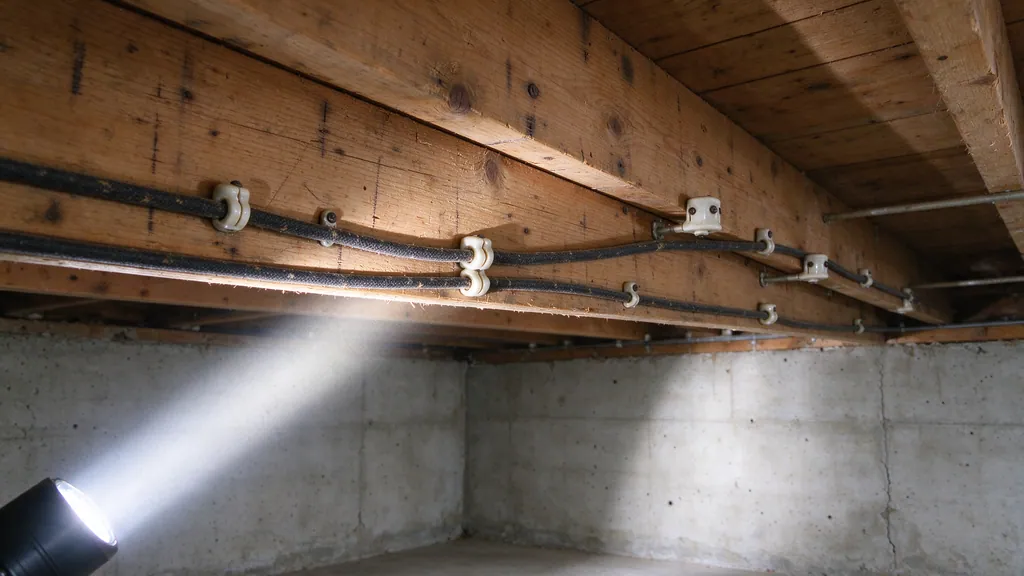
You found the house, the offer was accepted, and now the inspection report says “knob and tube observed.” You can still buy it; plenty of good Minneapolis houses have some original wiring. The risk is in what you don’t know yet: how much is live, whether you can insure the house, and what fixing it would take. You can usually answer all three before your contingency runs out.
At Northloom Minneapolis Knob and Tube, we trace and replace knob and tube across Minneapolis and St. Paul, often for buyers with a contingency deadline on the calendar. This guide gives you the order to work in, so you can proceed, negotiate or walk away with reasons.
What do I need to find out before my contingency ends?
Three things, and each one makes the next easier to answer.
| What you need to know | Who answers it | When |
|---|---|---|
| How much of the house still runs on knob and tube? | Tracing the circuits | In the first days of the contingency |
| Can you insure the house, and on what terms? | Insurance agents quoting with the inspection report | Alongside the tracing |
| What would fixing it involve and cost? | A written scope from the tracing | Before the contingency ends |
Insurance quotes are more useful when you can tell the agent how much is live. A scope is more useful when you know what the insurer wants. So start the tracing and the insurance calls in the same week.
Didn’t the home inspector already check the wiring?
Partly. A home inspector surveys the whole house and notes knob and tube where it’s visible, usually in the basement and attic, often along with ungrounded outlets found with a plug-in tester. The report typically recommends evaluation by a licensed electrician.
- What the report can tell you
- That knob and tube is present, where it was seen, and some conditions visible that day.
- What it can't tell you
- How much is live, what it feeds, what’s been spliced into it, or what replacing it would cost.
- What comes next
- Tracing the circuits, which can usually be scheduled within your contingency.
What happens during the tracing visit?
We switch circuits off at the panel, write down what goes dark, identify the wire on each circuit, follow exposed runs and test which original circuits are live. The walls stay closed. You’ll need the seller’s permission for access, which the agents usually arrange like any other inspection.
You get a circuit list and a recommended scope: nothing, partial replacement, a whole-house rewire, or confirmation and removal of dead runs. The guide to whether knob and tube is still active explains the method.
Why does this come up on so many Minneapolis listings?
Because so much of the housing is old. About 70% of Minneapolis’s one- to three-unit residential buildings were built by 1939, and in older communities like Powderhorn and Longfellow the share passes 85%. Most have been updated in stages, so “knob and tube observed” usually means some original wiring remains, not that the whole house is original.
Will I be able to insure the house?
That’s where knob and tube most often causes trouble, and lenders generally require homeowners insurance. Many carriers ask whether any knob and tube is energized, and some won’t write a new policy until it’s replaced or shown to be disconnected.
- Get quotes early
- Bring the inspection report, and the tracing result if you have it.
- Ask the exact question
- Does the carrier care about energized knob and tube, or any knob and tube at all?
- Shop around
- Carriers differ, and an independent agent can approach several.
- Fallback
- Minnesota’s FAIR plan insures homes the regular market declines, and can require noted improvements first.
The homeowners insurance guide covers what carriers ask.
How do I use the results to negotiate?
With a circuit list and a written scope, you’re negotiating on facts instead of a line in a report.
| Your option | When it fits |
|---|---|
| Price reduction or credit | You want to choose the scope and who does it after closing |
| Seller repairs before closing | The scope is small and the timeline leaves room for the permit and inspection |
| Proceed as is | Little is live, the house can be insured, and the work fits your plans |
| Walk away | Too much is live, insurance isn’t available on workable terms, or the scope is more than the deal can absorb |
If the seller does the work, ask for the permit number, the final inspection and a written record of what was replaced and disconnected.
Will the city’s sale report say anything about the wiring?
It may. In St. Paul, a City-licensed evaluator’s Truth-in-Sale of Housing report is available to buyers within three days of listing; it’s a disclosure, and the city’s sample report rates ungrounded three-prong outlets in a kitchen as hazardous. In Minneapolis, what the city’s sale evaluation reports and requires is confirmed with the evaluator for each house. The TISH guide explains both.
What would replacing it involve after I buy?
If your scope turns out to be a rewire, it helps to know what you’re taking on before you close.
- Budget
- Our typical range for a whole-house replacement is $12,000 to $36,600, about $8 to $20 per square foot, before panel work and wall finishing. A written estimate after tracing gives you the real number to negotiate with.
- Permit
- In Minneapolis, $191 from the state for 15 to 30 circuits in a one-family home, or $226 with a new service.
- Living there
- Most owners stay home; we work room by room and keep the heat on.
- Timing
- Rewiring before you move in, while the rooms are empty, is easier than afterward.
The cost guide breaks a local price into its parts.
Should I rewire before I move in?
If you close with original wiring in place, the weeks between closing and move-in are the easiest time to rewire. Empty rooms mean no furniture to shift, no family to schedule around and no power outages to plan meals around. Insulation, painting and floor refinishing you were planning anyway can then follow in the right order: wiring first, then insulation, then finishes.
What should I ask the seller?
Sellers often know more than the listing says. Ask, through the agents: whether any rewiring has been done and when, whether permits were filed, whether an insurer has ever asked about the wiring, and whether any electrician’s records exist. Permits and records from earlier work shorten the tracing and tell you which parts of the house are already modern.
What’s my step-by-step plan?
- Read the electrical section of the inspection report closely.
- Get the circuits traced within the contingency.
- Get insurance quotes with the report and the tracing result.
- Ask your lender what it requires.
- Get a written scope and price for any work.
- Negotiate with the numbers, or walk away with reasons.
Questions about a house you’re considering: (612) 509-6597.