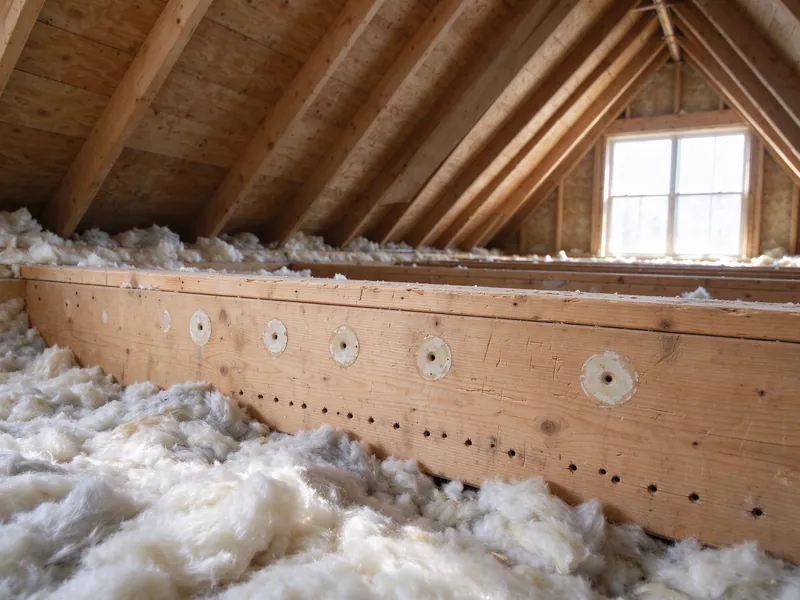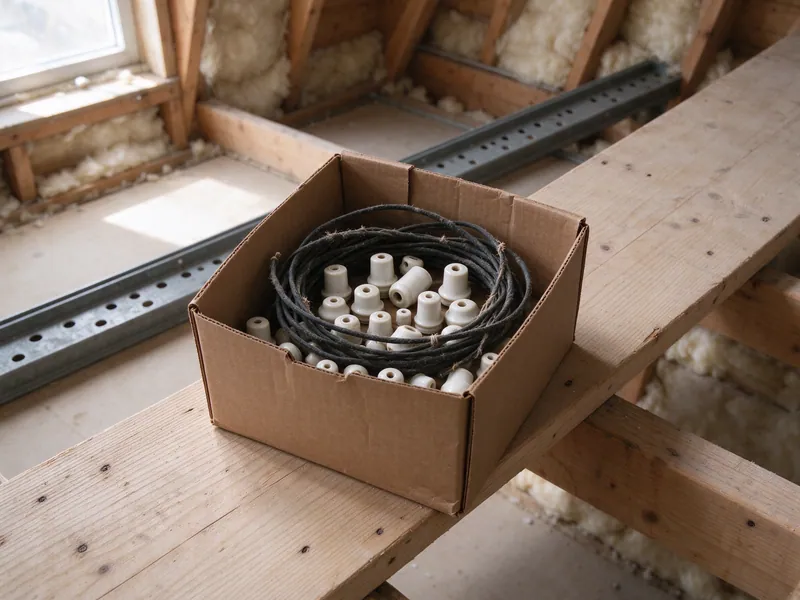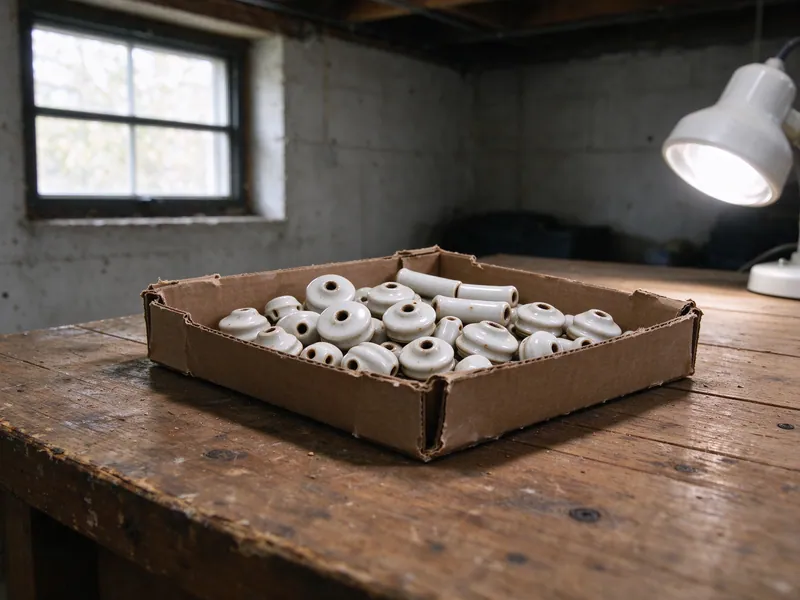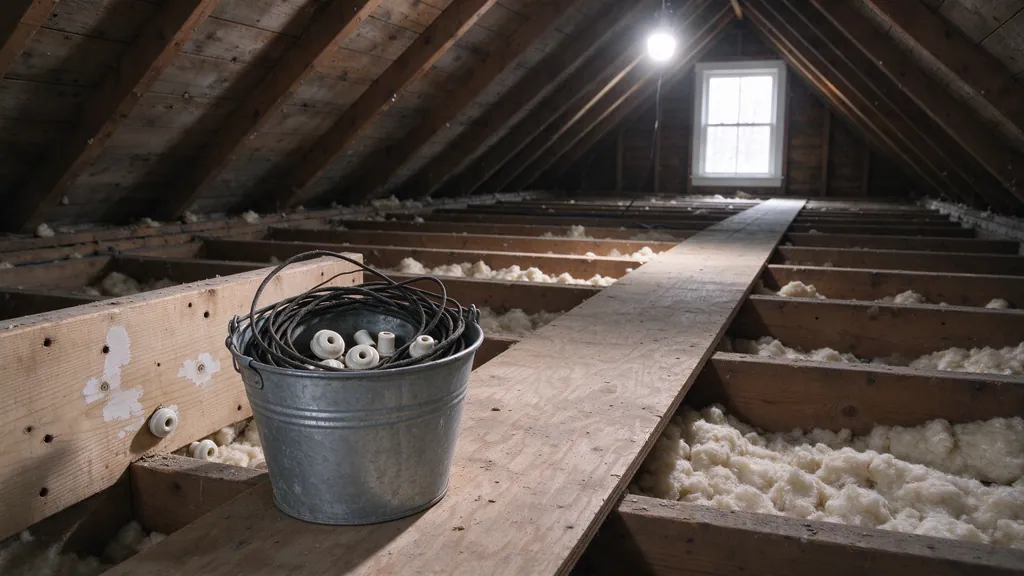
You’ve got porcelain knobs and old wire in the attic or across the basement ceiling, someone told you it’s “probably dead”, and your insulation crew, your insurer or your buyer wants more than probably. What you need is proof, and usually an empty attic.
At Northloom Minneapolis Knob and Tube, we remove and disconnect knob and tube in Minneapolis and St. Paul. This is the right job when tracing shows your original wiring is already out of use, or once a rewire has moved every light and outlet onto new circuits.
Removal is less about taking wire out of a house than about proving the old system is out of service. We deliver that proof in writing, and we take out whatever can come out cleanly.
What do you check on the first visit?
We confirm the starting point: which original runs are dead, which are still live, and where each one starts.
- At the panel
- We trace the circuits to find any original wiring still connected.
- Attic and basement
- We follow exposed runs to their source points and check them for splices to newer cable.
- Insulation
- We note anything lying on the runs, and flag loose, pebbly fill as possible vermiculite.
- Your scope
- A written list of what we’ll disconnect, what we’ll pull and what stays in place.
Do you take every piece of old wire out of the house?
No. Three different things get called removal, and your scope says which applies where.
We disconnect every original run, always: we cut it off where it starts, so nothing downstream can be energized by a forgotten switch or splice. We abandon in place the runs sealed inside finished walls, where pulling them would mean opening plaster for no electrical benefit. And we physically remove exposed runs in attics and basement ceilings, where the conductors, knobs and tubes come out without damage to your house.
You won’t be the first to leave deactivated wiring in the walls. The Center for Energy and Environment notes that electricians often leave deactivated knob and tube in place, and that insulation contractors generally want confirmation before they insulate.
How do you prove a circuit is really dead?
Knob and tube runs its hot and neutral conductors separately, sometimes in different joist bays and from different source points. A run can look abandoned and still be half of a live circuit, and a run that’s dead at one end can be fed from a splice at the other. So we work like this:
- Source first
- We disconnect each run where it starts, not at a wall switch.
- Each conductor
- We test hot and neutral separately along their length.
- Splices checked
- We find joints to newer cable and resolve them so nothing is back-fed.
- Written down
- We record every disconnection point and every test.
Should I clear the attic before it’s insulated?
Yes, that’s where removal pays off most. The electrical code bars concealed knob and tube in spaces filled with loose, rolled or foamed insulation around the conductors. Xcel Energy’s attic insulation rebate, 40% of qualifying work up to $1,200 for customers who heat with Xcel gas or electricity, only helps once your attic can actually be insulated.
Clearing the attic first means your insulation contractor sees empty joist bays and a record, not a tangle of old wire with a note saying it’s probably dead. Our attic insulation service covers that sequence in detail.
Is removal all I need, or does something come first?
Removal stands on its own only when nothing in your house still depends on the original wiring.
| Situation | What removal means here |
|---|---|
| Earlier owners rewired, and tracing shows every original run is dead | The whole job: confirm, disconnect any loose ends, pull exposed runs, write the record |
| A rewire has just moved every circuit onto new cable | The last step of the rewire, often done the same week |
| Some original circuits are still live | Not yet: those circuits get replaced first, through partial replacement or a whole-house rewire |
| The attic is about to be insulated | Timed just ahead of the insulation contractor, so the two jobs run back to back |
What will still be in my walls afterward?
Even a thorough removal leaves some original hardware behind, and that’s normal. Porcelain tubes stay in the joists and studs they were set through, because taking them out means drilling or cutting framing. Knobs nailed to framing inside finished walls stay with the dead conductors on them. What matters is that none of it is connected to anything, and that your record says so.
Can removal happen as part of my rewire?
Yes, and that’s when it costs least. On a whole-house or partial rewire, we build removal into the last days of the job. Once each new circuit is live and inspected, we disconnect the original circuit it replaced at its source and test it, and we take out the exposed attic and basement runs while we’re already there. That costs less than a separate visit later, and your final record covers both the new wiring and the old.
What does removal cost?
We price removal from your house. It starts with tracing, and our typical range for a knob and tube evaluation is $150 to $500. Beyond that, the main things that move the price are how much exposed wiring there is to pull, how easy your attic is to work in, how many source points we have to find and disconnect, and whether you need a written letter for an insurer on top of the record. A cramped attic with deep insulation takes longer than an open one, and a house with several generations of splices takes longer to prove dead than one with a single original fuse box. You get a written estimate before anything is booked.
Who uses the record, and what’s in it?
The written record matters as much as the empty attic.
| Record entry | Who uses it |
|---|---|
| Each original run, its source and where it was disconnected | Insurers asking whether any knob and tube is energized |
| How each run was tested and the result | Insulation contractors confirming the attic is safe to insulate |
| What was pulled out and what stays in place, dead | Buyers, their inspectors and future electricians |
| Any original circuits still live and left out of the scope | Anyone planning the next phase |
Keep it with your house papers. The guide to verifying knob and tube is gone explains what a good record contains, and the cost guide covers how removal fits into a larger budget.