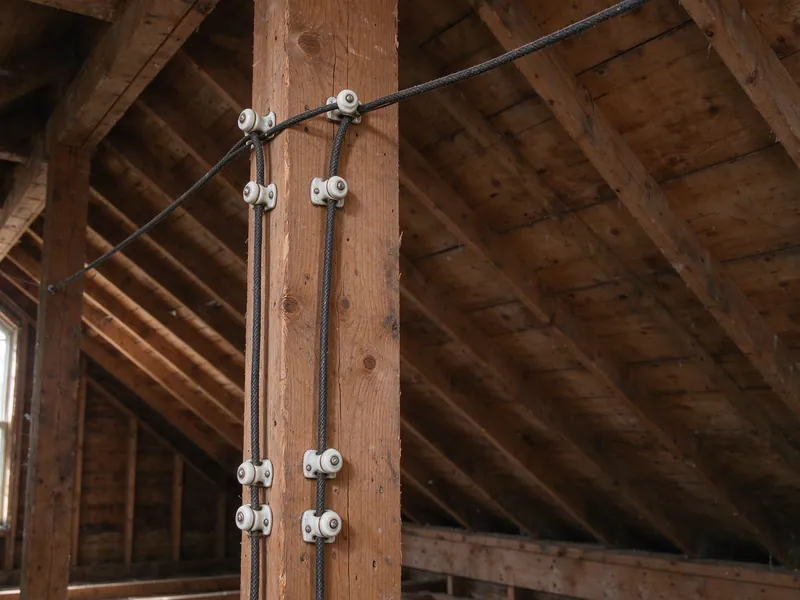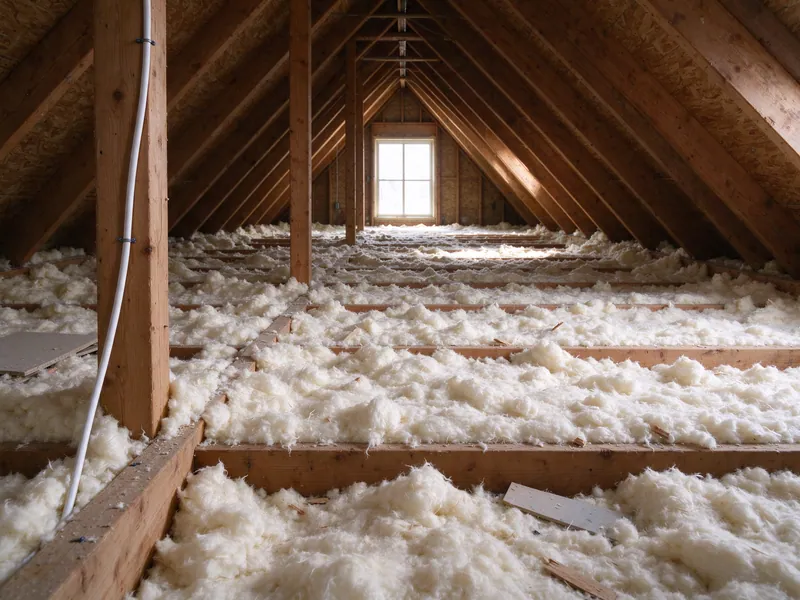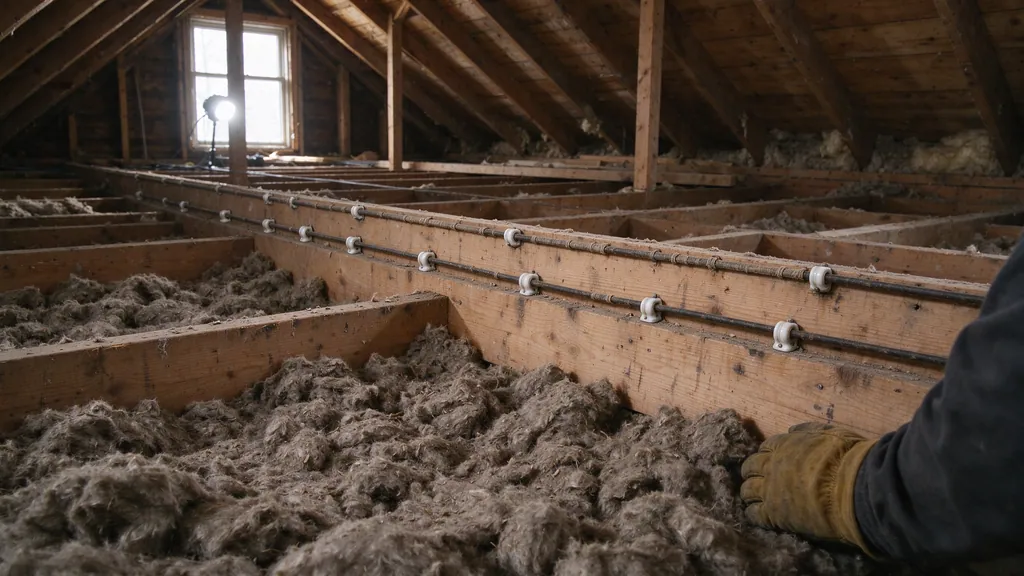
You got an insulation bid, maybe with an Xcel rebate attached, and the insulation contractor stopped at the hatch: there’s knob and tube up there, and they won’t blow insulation around it until someone settles the wiring. That’s the step we do.
At Northloom Minneapolis Knob and Tube, we handle the electrical work that has to come before attic insulation in Minneapolis and St. Paul. We trace the original runs in your attic, confirm them dead or replace them, and hand you a written record so the insulation job can go ahead.
In a Twin Cities winter, with a January normal of 16.2°F, an uninsulated attic costs you every month. In a house built by 1939, the attic is also often where original knob and tube still runs, and the two can’t share the space until the wiring is settled.
What do you do on the first visit?
We start at your panel and finish in the attic.
- At the panel
- We trace the circuits to find which ones still run through the attic on original wire.
- At the hatch
- We follow the attic runs by eye and flashlight, and note the insulation’s depth and type.
- Live or dead
- We test the original attic runs to see which still carry power.
- Insulation check
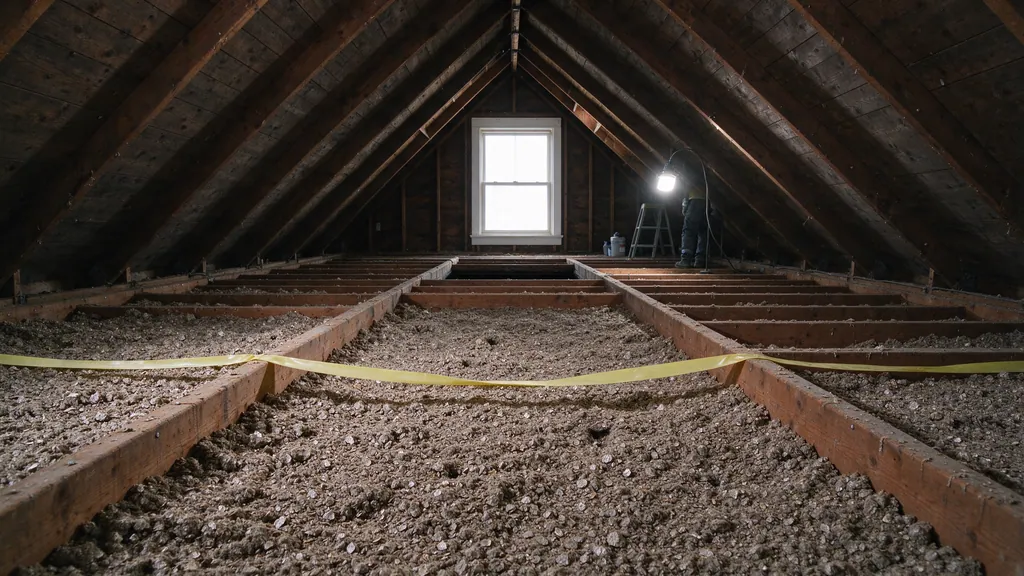
- We flag loose, pebbly, gray-brown fill as possible vermiculite before anyone walks through it.
- Your scope
- A written plan: confirm and record, replace live circuits, or rewire more of the house first.
Why won’t my insulation contractor work around the old wiring?
Knob and tube was designed to shed heat into open air. Buried in insulation, conductors that ran cool for decades can run hot, and their old rubber insulation breaks down faster. The insulation crew is protecting your house, and themselves, by waiting.
The rules back them up. The electrical code bars concealed knob and tube in hollow spaces filled with loose, rolled or foamed insulation around the conductors, and a 1987 change to the code first barred insulation in contact with it. The Center for Energy and Environment notes that insulation contractors generally won’t insulate around active knob and tube and that most want an electrician to confirm it’s inactive first. That confirmation is what you get from us.
Do I need new wiring, or just proof the old wiring is dead?
That depends on what we find when we trace.
| What tracing finds | What your attic needs |
|---|---|
| Every attic run is already dead | We disconnect any loose ends at the source, test, pull exposed runs if you want, and write the record |
| A few live original circuits cross the attic | We replace those circuits with grounded cable, then disconnect and record the originals |
| Original circuits feed most of the house | Consider a whole-house rewire before insulating, so the attic is opened once |
We run any new wiring across the attic along the framing, clear of where insulation will sit, and make junctions in covered boxes instead of leaving them loose. New attic wiring gets its rough-in inspection before insulation covers it.
Can I still get the Xcel insulation rebate?
Yes, if you qualify. Xcel Energy’s insulation rebate is often what makes the attic project worth doing now. For customers who heat with Xcel gas or electricity, it pays toward qualifying work:
| Measure | Requirement | Rebate |
|---|---|---|
| Attic insulation | From R-19 or less to R-49 or more | 40% of project cost, up to $1,200 |
| Wall insulation | From empty cavities to R-11 or more | 40% of project cost, up to $1,200 |
| Air sealing | At least 15% leakage reduction, tested before and after | 40% of project cost, up to $600; required for insulation rebates |
Xcel requires an insulation contractor with the right air-leakage certification, and self-installs don’t qualify. The rebate covers insulation and air sealing, not the electrical step, but the insulation can’t happen without it. Confirm current terms with Xcel before you schedule.
What if my attic has vermiculite?
We stop and get it tested. Western Mineral Products at 1720 Madison Street NE processed Libby, Montana vermiculite, sold as Zonolite attic insulation, from 1938 to 1989. The Minnesota Department of Health links that ore to asbestos and ran a community investigation in Northeast Minneapolis, where about 268 residential properties were cleaned up.
The guide to asbestos, lead and vermiculite during rewiring covers what testing involves.
How do you hand off to the insulation crew?
The attic works best as a planned handoff between trades, in this order:
- We trace the attic runs and flag any suspect insulation.
- We replace live original circuits, and new attic wiring gets its rough-in inspection.
- We disconnect original runs at their source, test them dead and, if you want, pull them from the attic floor.
- The written record goes to you and your insulation contractor.
- Your insulation contractor air seals and insulates, with the rebate paperwork on their side.
We note in the record any holes drilled through top plates for new cable, so the air-sealing crew knows where to look. Boxes that must stay accessible get mounted above the finished insulation depth instead of buried under it, so a future electrician can find them without digging.
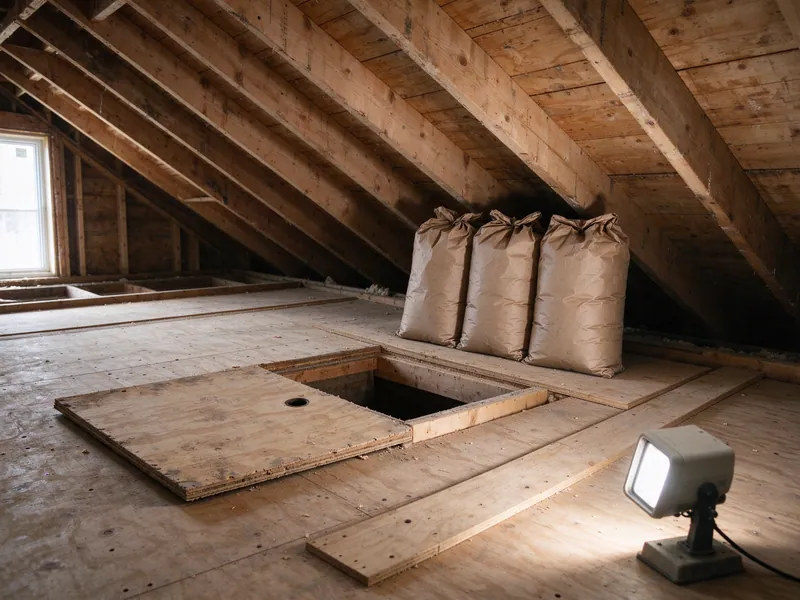
What if part of my attic is floored or finished?
Some attics have floorboards or a finished room over part of them. We can still trace, because original runs can be followed from where they enter and leave. Replacing a live circuit under a floored attic may mean lifting a few boards, and your scope lists that before work starts, along with how the boards go back.
What do I get once the attic is done?
Once the wiring is settled and the attic insulated, your house holds heat better through the coldest months, ice that forms from heat escaping through the roof is less likely, and the rebate returns part of the insulation cost if you’re a qualifying Xcel heating customer. Xcel also offers a $600 bonus when qualifying insulation and air sealing are followed by a qualifying heat pump within two years. That’s worth knowing if a heat pump is in your plans, because it also affects the panel and service your house will need.
What does the attic step cost?
We price it from what tracing finds. Confirming dead runs and pulling them from an open attic is the smallest version, and it starts with an evaluation in our typical range of $150 to $500. Replacing live circuits that feed top-floor rooms adds openings and cable; where that’s the job, our typical range for partial replacement is $3,000 to $10,000, about $750 to $2,500 a circuit. A low attic, deep existing insulation or a floored attic adds hours. You get a written estimate before work is booked, and the cost guide puts the electrical step alongside the insulation it unlocks.