Your home inspection says “knob and tube observed”, your insurer wants to know whether any is still in use, or your insulation contractor stopped at the attic hatch. Each of those is waiting on the same missing fact: how much of your house still runs on original wire.
At Northloom Minneapolis Knob and Tube, we do knob and tube inspections in Minneapolis, St. Paul and the nearby suburbs. We trace every circuit from your fuse box or panel and mark each one live original, dead original or modern, so you know what you actually have before anyone prices a replacement.
What happens during the visit?
We start at your panel and finish with a list. It’s mostly looking and testing, and your walls stay closed.
- At the panel
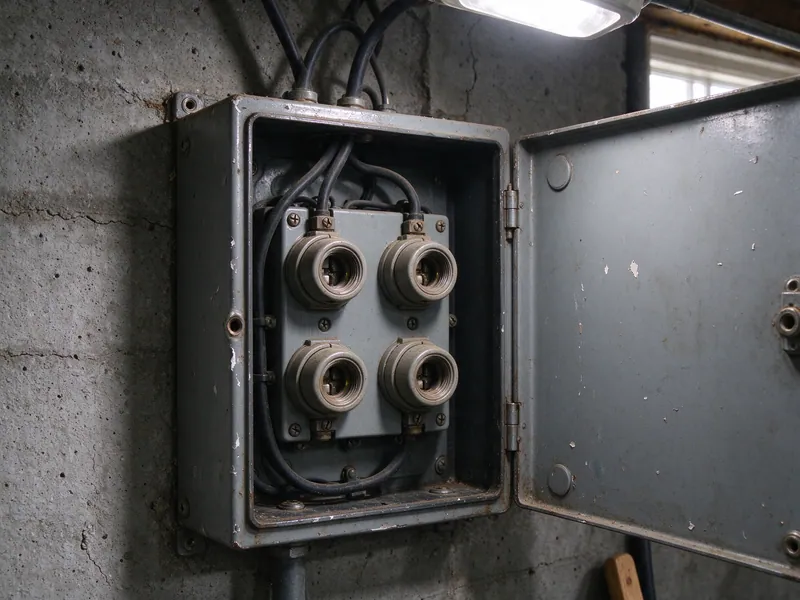
- We match each fuse or breaker to the rooms and devices it feeds, and identify the wire leaving it.
- In your rooms
- We check outlets, switches and fixtures against their circuits, and test three-prong outlets for a real ground.
- Attic and basement
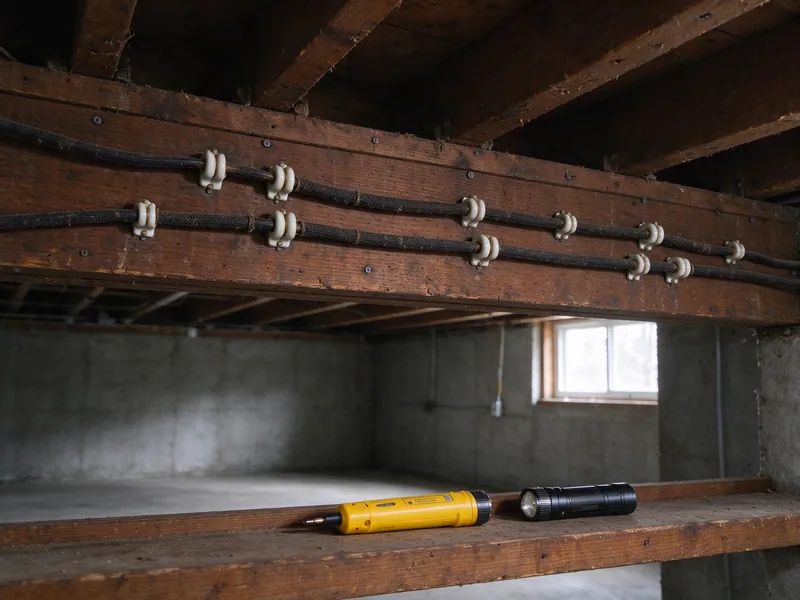
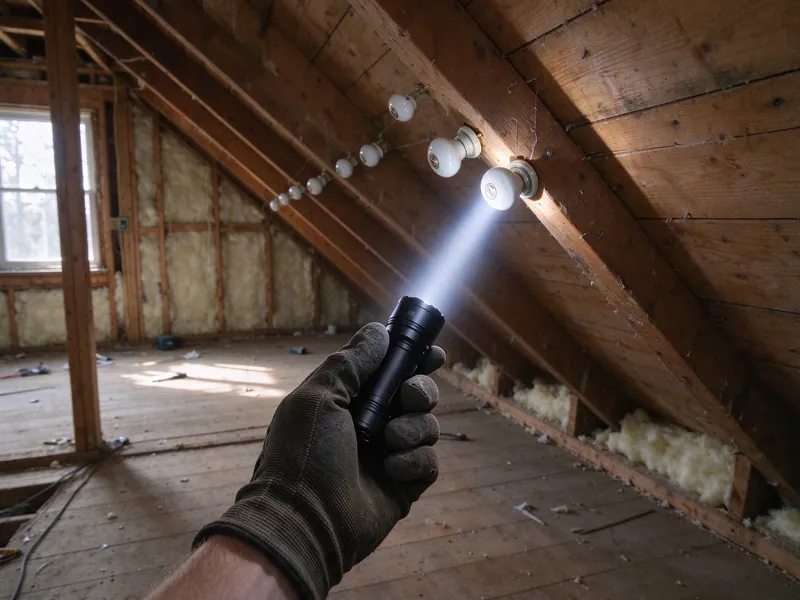
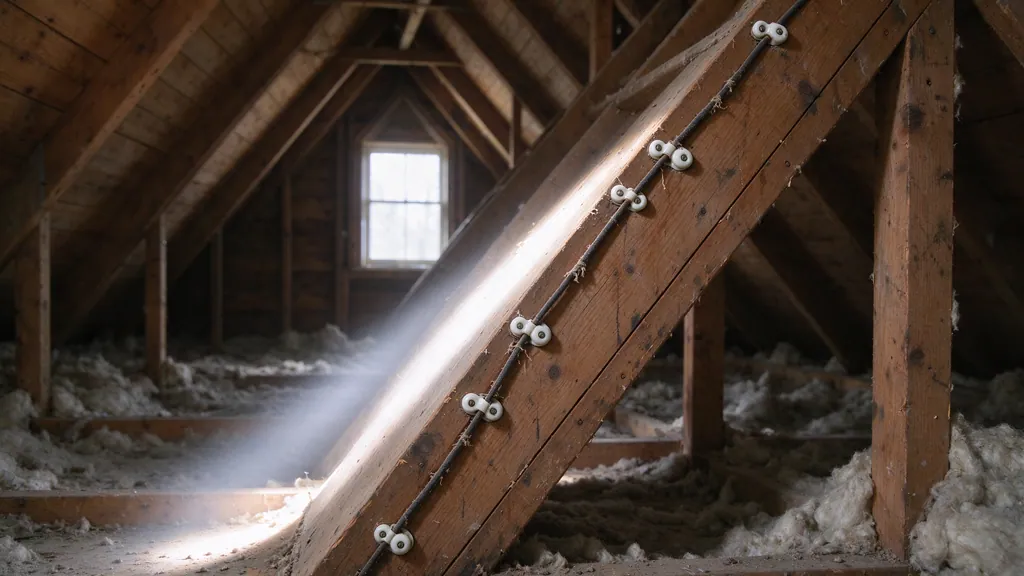
- We follow exposed runs as far as they can be seen, noting splices, damage and insulation contact.
- At the end
- We walk you through what we found, then write it up.
Will you be able to tell me whether my wiring is safe?
We can tell you how much of your house still runs on original wire, which is the question that matters most, and we can show you the conditions an insurer or a buyer will ask about. There are things no tracing can prove, and our record says so.
| It can show | It can’t show |
|---|---|
| Which circuits are live original, dead original or modern | The condition of every inch of wire inside finished walls |
| Where exposed runs go and what has been spliced into them | Whether a concealed run has been damaged out of sight |
| Insulation lying on or around original wiring | How an insurer will decide; that’s the carrier’s call |
| Fuses or breakers too large for the wire they protect | A promise that nothing will ever fail |
That limit is honest, and it’s why our record says what we saw and tested instead of calling your house “safe”.
How do you know whether an old run is live or abandoned?
We start at the source, not at whatever wire is visible. Knob and tube runs its hot and neutral separately, sometimes in different joist bays, so a run that looks abandoned can be half of a live circuit.
We switch each circuit off at the panel and record the outlets, lights and exposed runs that go dead with it. Whatever stays live belongs to another circuit, and we follow that one in turn. By the end, every circuit has a path, a set of rooms and a type.
What else do you look for besides live circuits?
Beyond which circuits are live, we look for the conditions that turn old wiring into a problem.
- Insulation contact
- The electrical code bars concealed knob and tube in spaces filled with loose, rolled or foamed insulation around the conductors. We record buried attic runs wherever we find them.
- Splices
- Joints between original wire and later cable, often in the attic near an old ceiling fixture or in the basement near the original fuse box.
- Overfusing
- A 15-amp circuit protected by a larger fuse can carry more current than its wire was made for, with nothing to stop it.
- Damage
- Cracked knobs, sagging conductors, insulation crumbled to bare copper, and runs nicked by later plumbing or ductwork.
What do I get in writing?
We write the record so you can hand it on. It lists every circuit with its type and the rooms it serves, notes the conditions we found and where, and recommends a scope. You can give it to your insurer, a seller can give it to a buyer’s agent, and an insulation contractor can use it to see which attic runs are confirmed dead. Our insurance documentation service turns the same findings into the letter a carrier asks for.
What usually comes after the evaluation?
The circuit list decides what comes next, and it often changes what people expected.
| What tracing finds | What usually follows |
|---|---|
| Original circuits still feed most rooms | Whole-house rewiring |
| Only a few original circuits remain live | Partial replacement |
| Every original circuit is already dead | Removal and disconnection, with a record |
| Mostly modern, with ungrounded outlets | Ungrounded outlet upgrades |
A house that looks like a full rewire may already be half done, and one that looks updated may still run its bedrooms on original wire. You can’t see either until the circuits are traced.
I’m buying, selling or insuring. What will my record focus on?
The tracing is the same; what the record emphasizes depends on who will read it.
| Who is asking | What they usually need from the record |
|---|---|
| A buyer during an inspection contingency | How much is live, what replacing it would involve and whether the house can be insured as it stands |
| A seller before listing | A clear answer to hand buyers, and the scope to fix first if anything needs it |
| An insurer | Whether any knob and tube is still energized, in writing |
| An insulation contractor | Which attic runs are confirmed dead, and which aren’t |
| A landlord with a duplex | Each unit’s circuits separately, with any shared circuits named |
What if my house has more than one panel?
We trace two- and three-unit buildings unit by unit. We match each unit’s panel or fuse box to its own rooms and call out circuits that cross between units, such as a basement or a common stair light fed from one side, because they’re easy to miss. The city counts 10,592 duplex and 963 triplex parcels, so this is a common case, not an exception. The duplex rewiring page covers what follows.
What does a knob and tube evaluation cost?
Our typical range for a knob and tube evaluation is $150 to $500. Where yours falls depends on the number of circuits, how many floors you have, whether the attic and basement ceiling are open or finished, and whether you need a written letter for an insurer on top of the circuit list. A duplex is two systems and takes longer than a single-family house of the same size. The cost guide covers what a replacement costs once the scope is known.