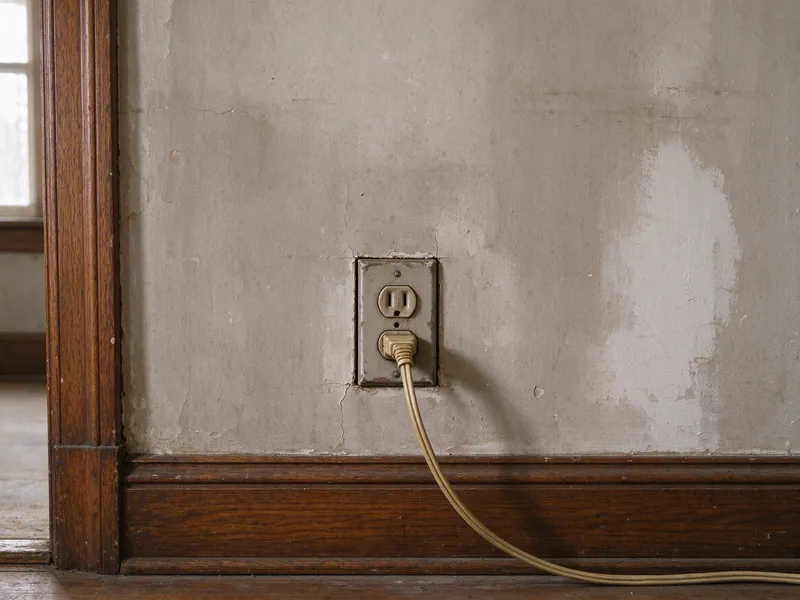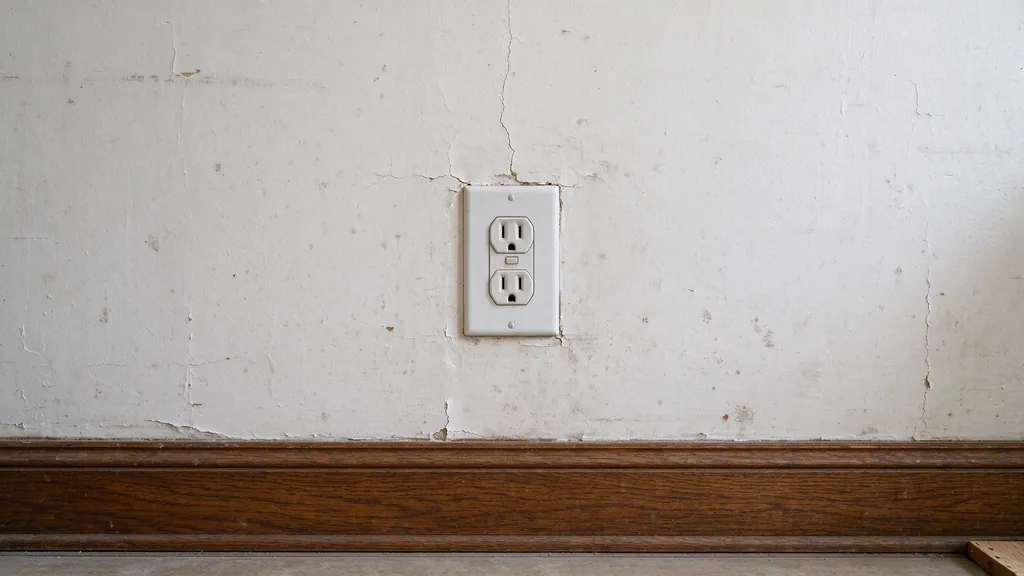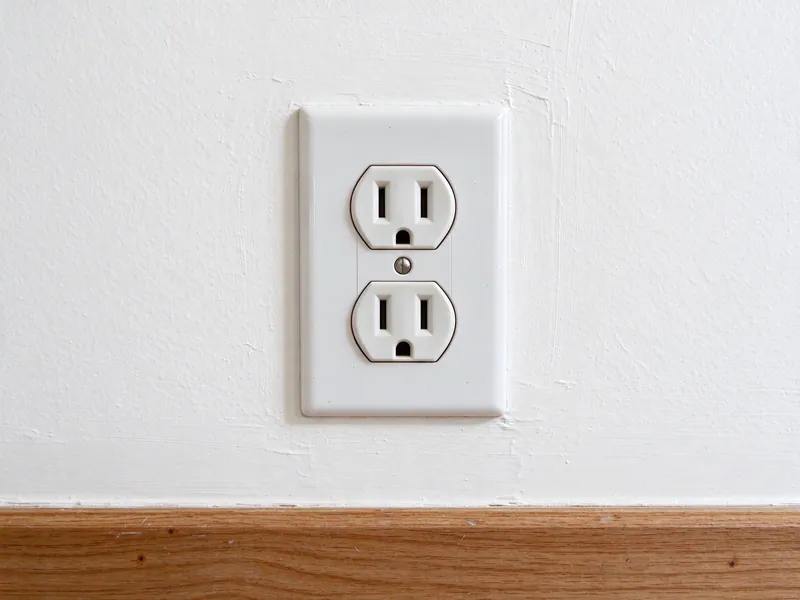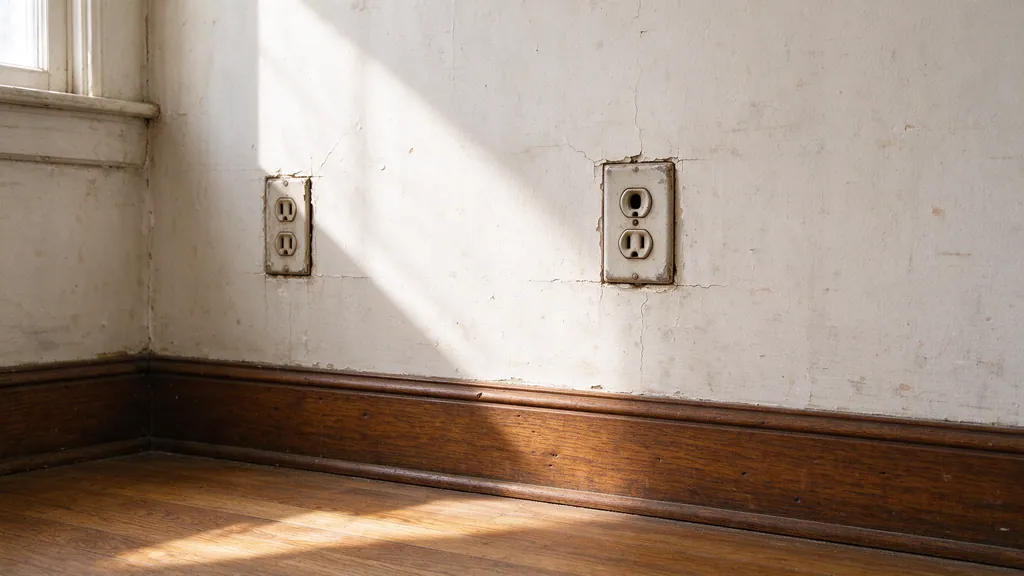
Your outlets are two-prong and nothing modern plugs in, or they’re three-prong and a home inspector says the third hole isn’t connected to anything. Either way, you want outlets that do what they look like they do.
At Northloom Minneapolis Knob and Tube, we correct ungrounded outlets in older homes across Minneapolis and St. Paul. We fix two-prong outlets, three-prong outlets with nothing behind the third hole, and outlets with false grounds, each the way the National Electrical Code allows. We test every outlet first, so you know which fix each one needs before we price it.
Ungrounded outlets are among the most common findings in a house built before about 1940. Knob and tube has no ground wire at all, and early cloth-covered cable often didn’t either. Over the decades, many two-prong outlets were swapped for three-prong ones so modern plugs would fit, leaving a third hole connected to nothing.
What do you check on the first visit?
We test your outlets and trace the circuits behind them, because the right fix depends on both.
- Every outlet tested
- We check each three-prong outlet for a real ground, and for the false ground a plug-in tester can miss.
- Circuits traced
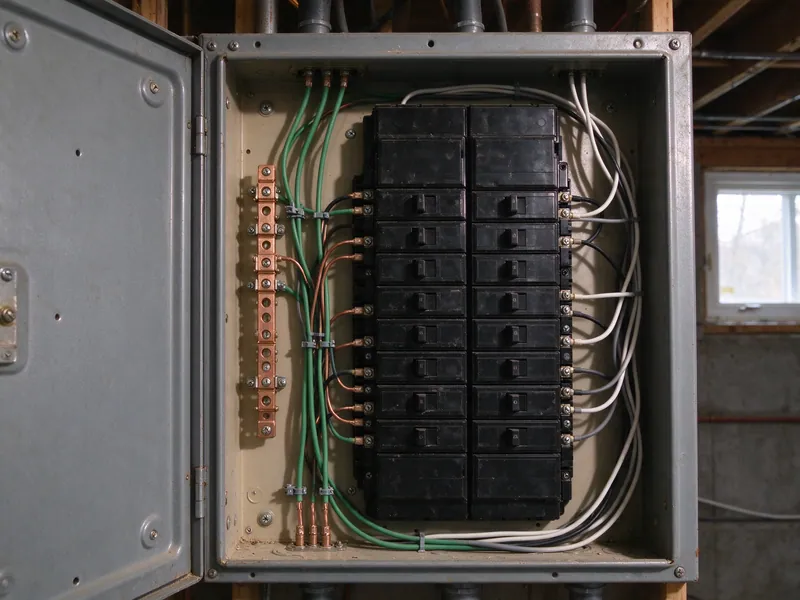
- We match each ungrounded outlet to its circuit at the panel.
- Wire identified
- Original knob and tube, cloth-covered cable or modern two-wire cable, which changes what makes sense.
- Your plan
- A written list of each outlet and the fix we recommend.
What’s actually wrong with a three-prong outlet that has no ground?
A grounded outlet has three connections: hot, neutral and an equipment ground. The ground gives fault current a path back to the panel, so a breaker trips if a metal appliance case becomes energized. Surge protectors also use it to divert spikes.
Knob and tube carries only a hot and a neutral. An outlet on it is either an honest two-prong, or a three-prong pretending to have a ground. The second is the problem, because anyone plugging in a grounded appliance or a surge strip reasonably assumes the ground is there.
Is a GFCI enough, or do I need a real ground?
The code allows three ways to replace an outlet where no ground exists.
| Option | What gets installed | Label required |
|---|---|---|
| Two-prong | A non-grounding receptacle | None |
| GFCI receptacle | A GFCI-type receptacle | “No Equipment Ground” |
| Protected three-prong | A grounding-type receptacle fed through a GFCI | “GFCI Protected” and “No Equipment Ground” |
Downstream of a GFCI on an ungrounded circuit, no ground may be connected between outlets, because there’s no true ground to connect it to. The labels tell the next person exactly what the outlet does and doesn’t have.
A GFCI is a real safety improvement: it cuts power when current leaks to ground, which protects people from shock, and it works without a ground wire. It doesn’t give a surge protector or a computer the equipment ground they rely on. Where that matters to you, the fix is a new grounded circuit.
When does the whole circuit need replacing?
Sometimes we can’t fix an outlet on its own, because the circuit behind it is the problem.
| What we find | Better fix |
|---|---|
| The outlet is on original knob and tube | Replace the circuit with grounded cable: partial replacement or a whole-house rewire |
| The circuit is spliced into original wiring somewhere | Trace and replace the original section, not just the outlet |
| A kitchen or bath outlet needs a true ground for appliances | A new grounded small-appliance or bathroom circuit |
| A home office or media wall needs grounded outlets | A new grounded circuit to that wall |
Original knob and tube can be protected by a GFCI, but the circuit is still original: aging rubber insulation, no ground and whatever splices it has collected. Spending on labeled devices for a circuit you’ll replace soon rarely makes sense. The guide to three-prong outlets on knob and tube explains the trade-off.
Will ungrounded outlets show up when I sell?
Very likely. Ungrounded three-prong outlets are among the items most likely to appear on a sale report.
- St. Paul
- The city’s sample Truth-in-Sale of Housing report rates ungrounded three-prong outlets in a kitchen as a hazardous condition. The report is disclosure, so it doesn’t force a repair, but buyers and their insurers read it.
- Minneapolis
- We confirm with the evaluator how the city’s sale evaluation rates ungrounded outlets for your house.
- Either city
- Correcting them before listing means the report describes labeled, protected outlets instead of a hazard.
TISH electrical repairs covers the other items that commonly appear.
Which outlets in my house matter most?
Not every ungrounded outlet carries the same risk or deserves the same fix. Where it sits decides a lot.
| Location | Why it matters | Usual fix |
|---|---|---|
| Kitchen counters | Water, metal appliances and heavy loads together | New grounded small-appliance circuits, with GFCI protection |
| Bathrooms | Water and hair dryers near the outlet | GFCI protection at minimum; a new grounded 20-amp circuit in a rewire |
| Laundry | A metal washer and water | A new grounded circuit with GFCI protection |
| Home office or media wall | Surge protectors and electronics need a true ground | A new grounded circuit |
| Bedroom lamp outlet | Low loads, two-prong plugs | Often an honest two-prong is enough |
Do I need arc-fault protection as well?
On new circuits, yes. Ground-fault and arc-fault protection do different jobs. GFCI protection guards against shock; arc-fault protection, which the code requires on new circuits in bedrooms, living areas, kitchens, laundry areas and hallways, guards against the sparking faults that start fires in damaged or loose wiring. Dual-function devices provide both. On a new circuit we plan both together; on an existing ungrounded circuit, the outlet fix focuses on shock protection and honest labeling. The AFCI and GFCI guide explains where each applies.
What will fixing my outlets cost?
We price outlet work from your list. The number of outlets to correct, how many circuits they sit on, whether one GFCI per circuit can protect a run of outlets, and whether any outlets need a new grounded circuit all move the price. A new circuit costs far more than a labeled device: where an outlet’s circuit is original wiring and has to be replaced, our typical range for that work is about $750 to $2,500 a circuit. So we build your list outlet by outlet, using each fix where it makes sense, and give you a written estimate before anything is booked.