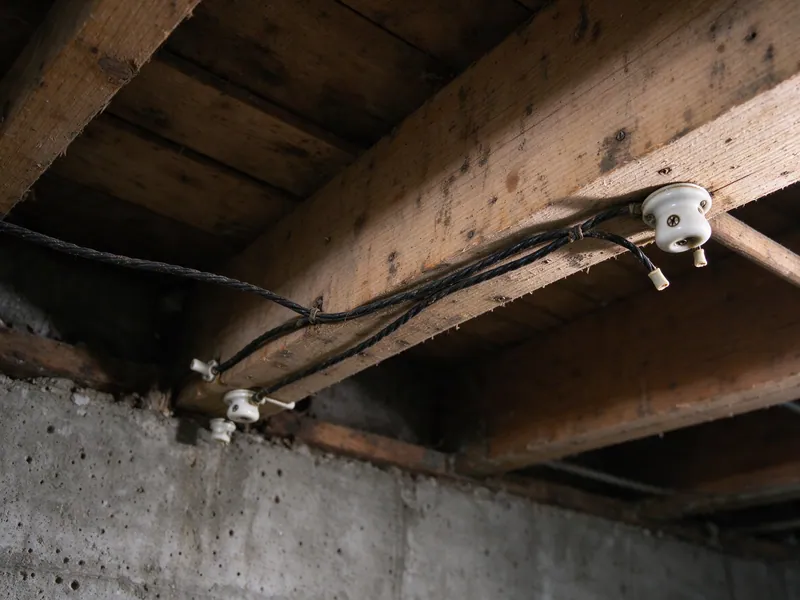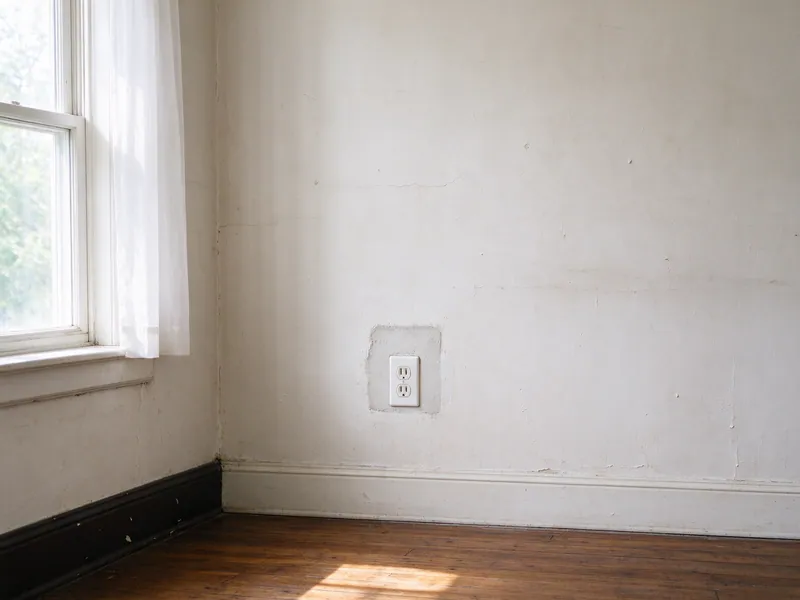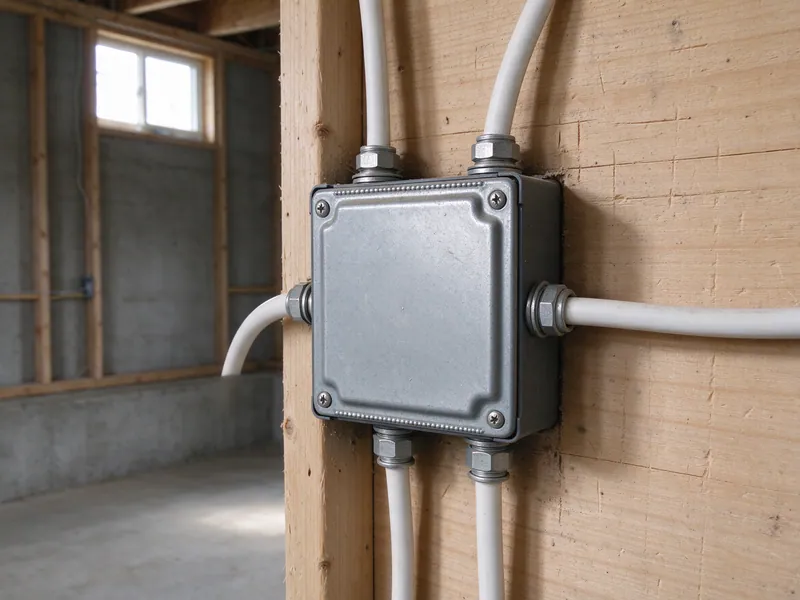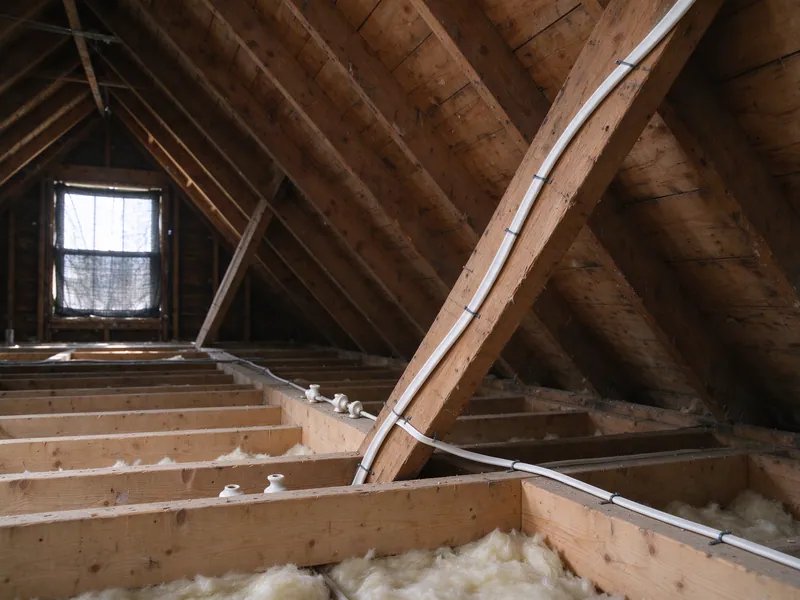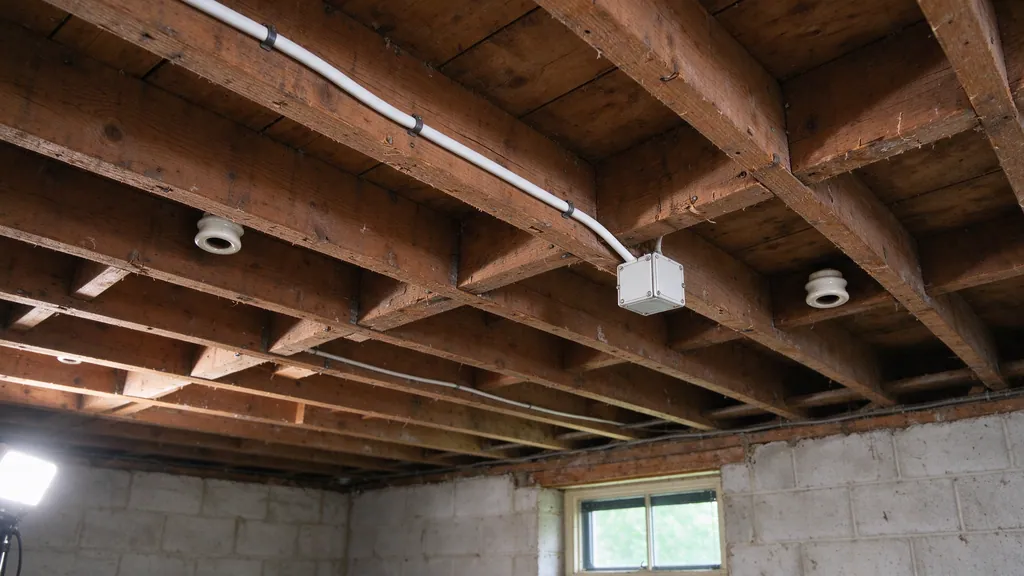
Your kitchen and bath were redone years ago, the basement has new cable, but an inspector or an insurer found knob and tube still feeding the upstairs bedrooms. You don’t need a whole-house rewire for that. You need the live original circuits found and replaced.
At Northloom Minneapolis Knob and Tube, we do partial knob and tube replacement in Minneapolis and St. Paul. We keep the scope narrow on purpose: we replace only the original circuits that tracing proves are still live, and we write down the boundary between the new wiring and what remains.
What happens on the first visit?
We do the same circuit tracing a full rewire starts with, because we can’t draw your scope without it.
- Trace
- We match every circuit to its rooms and identify it as original, cloth-covered or modern.
- Test
- We test the original circuits to see which still carry power.
- Map access
- We note routes from the attic and basement for the circuits likely to be replaced.
- Your scope
- A written list of the circuits to replace, the openings to expect and the patching included.
How do I know whether partial is enough for my house?
A partial job is a good answer when the live original wiring is a small, contained share of your house.
| Partial makes sense when | Look harder at a full rewire when |
|---|---|
| Two or three original circuits remain, often bedrooms or an upstairs hall | Original circuits feed most rooms on most floors |
| The kitchen, bath and basement were already rewired | Later wiring was spliced into original runs throughout |
| The panel has room for a few new circuits | The house still runs on a fuse box |
| Your insurer only asks whether any knob and tube is energized | Your insurer or a buyer wants no original wiring left at all |
Plenty of Minneapolis houses fall in between. About 70% of the city’s one- to three-unit buildings were built by 1939, and decades of remodels have left most of them somewhere between original and fully updated.
Why can’t you just do the one bedroom?
Because we draw the line at whole circuits, never halfway along one. We replace each original circuit in the scope from the panel to every outlet, switch and light it served, then disconnect it at its source.
That matters because original circuits rarely stay in one room. A bedroom circuit may also feed the hall light and an outlet in the next room, and rewiring the bedroom alone would leave those on original wire. We trace the full reach of each circuit before we set the boundary.
What record do I get for what’s left behind?
The record from a partial job matters as much as the wire. It lists each new circuit, each original circuit we replaced and disconnected, and any original runs left in place, live or dead, with where they are.
- For your insurer
- A clear answer to whether any knob and tube is still energized.
- For a buyer
- A boundary their own inspector can check against.
- For an insulation crew
- Which attic runs are confirmed dead, so insulation can go in.
- For the next phase
- A map to start from instead of tracing again.
What does a partial job usually look like?
Every house is different, but the same patterns turn up often enough to describe. These are general patterns, not findings about any particular house.
- Upstairs left behind
- The kitchen, bath and basement were rewired during remodels, while the bedrooms and upstairs hall still run on one or two original circuits.
- Lights, not outlets
- Outlets were replaced over the years, but first-floor ceiling lights are still fed by original runs across the attic or the floor above.
- One stubborn room
- A front room or a sunporch kept its original circuit because nobody ever opened its walls.
- Spliced extensions
- An original circuit was extended with newer cable to reach an added outlet, so a run that looks modern at the outlet is original at the source.
In each case the job is the same: we replace the original circuit end to end, move every device it served onto new grounded wiring, and disconnect the old run where it starts.
Will the new circuits get the same protection as a full rewire?
Yes. New circuits in a partial job meet the same rules. Bedrooms, living areas, hallways and closets get arc-fault protection; bathrooms, kitchens, basements and outdoor receptacles get ground-fault protection. Those devices usually live at the panel, so we check whether your existing panel has room for the new breakers before we price the job. When it doesn’t, we add a panel upgrade to the scope instead of discovering it halfway through.
Will a partial job satisfy my insurer or a buyer?
Insurers and buyers don’t all ask the same question. Some care only whether any original wiring is live; others want to know whether any is left in the house at all. A Minnesota insurer that wants a known condition fixed has to ask in writing twice before it can nonrenew over it, which usually leaves you time to decide the scope with the carrier’s actual requirement in hand.
For a sale, a partial job with a clear written boundary often answers more questions than a vague “some of it was updated”. The guide to partial versus full replacement compares how each reads to an insurer and a buyer.
Can I do the rest of the house later?
Yes. A partial job can be the first step of a whole-house plan. The circuits your insurer, a closing or an attic project depends on go first; the rest follow when your budget allows or a remodel opens the walls anyway.
Planning the panel with that in mind saves you paying for it twice. If later phases will need spaces for arc-fault and ground-fault breakers, we leave room for them in the first phase, and the written boundary means the next phase starts from a known map. The cost guide explains how circuit count drives the price of each phase.
What does a partial replacement cost?
Our typical range for partial replacement is $3,000 to $10,000, about $750 to $2,500 a circuit. We price yours from its circuit list. The number of original circuits being replaced matters most, followed by how far each one reaches across the house, how easily cable can drop from the attic or climb from the basement to those rooms, whether the panel needs more spaces, and the patching your scope includes. A single upstairs circuit with an open attic above it is a small job; three circuits spread across two floors under a finished attic is a much larger one. You get a written estimate before any work is booked.