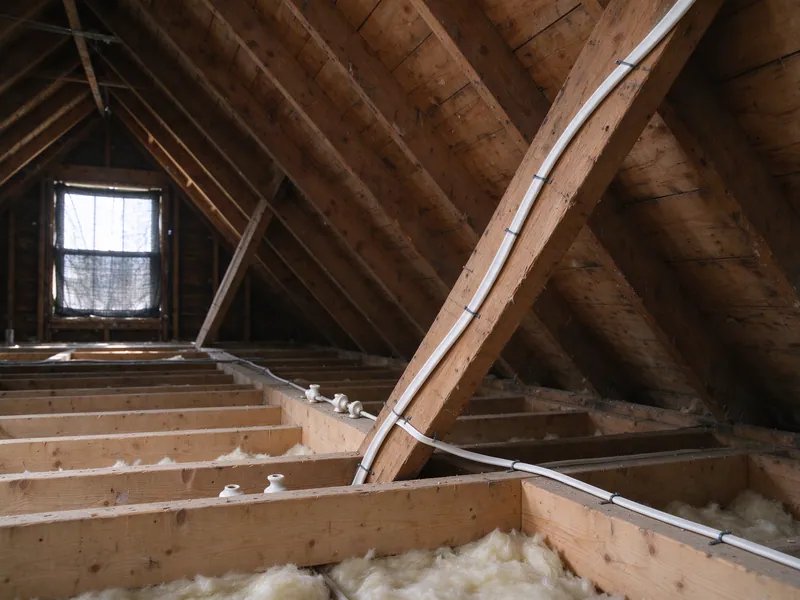
A seller said it was rewired, or you paid for a rewire years ago, and now your insurer or a buyer wants to know: is any knob and tube still live? In practice, “gone” means every original circuit is disconnected at its source and tested dead, exposed runs are pulled where that’s practical, and a written record shows how each one was confirmed. Dead runs sealed inside finished walls usually stay there.
At Northloom Minneapolis Knob and Tube, we disconnect, remove and document knob and tube across Minneapolis and St. Paul. This guide shows you what proper confirmation involves, so you know what to ask for and what your record should prove.
What should “gone” actually mean?
It depends on the word someone used. Here’s what each claim should mean.
| What you were told | What it should mean |
|---|---|
| “No knob and tube is energized” | Every original circuit disconnected at its source and tested dead |
| “Knob and tube removed” | The same, plus exposed runs physically pulled; hidden runs may remain, dead |
| “Rewired” | Every circuit replaced with new cable, and the originals disconnected |
| “Updated” | Unclear; ask exactly what was done |
Your insurer or a buyer is usually asking the first question. A record that answers it directly is what they want to see.
Isn’t switching it off enough?
No. Turning off a breaker or flipping a switch doesn’t make a run dead for good; anyone can switch it back. Disconnecting it at the source does.
- Where
- At the old fuse block, the panel, or the splice where the original run took its power.
- How
- Wires cut back, capped and, where it helps, tagged.
- Why
- So no future breaker, switch or forgotten splice can bring it back to life.
How do you test that it’s really dead?
Wire by wire. Knob and tube runs its hot and neutral separately, sometimes in different joist bays and from different sources, so a run can look abandoned and still be half of a live circuit.
- Each wire
- We test hot and neutral separately along their length.
- Splices found
- We find the joins to newer wiring, so nothing can be fed from the other side.
- Switches checked
- We test runs with switches in both positions.
- Recorded
- We write down each test and where we did it.
Why are there still knobs in my walls?
Because even a thorough job leaves some original hardware behind.
- Tubes
- Porcelain tubes stay in the framing they pass through.
- Hidden runs
- Dead wires inside finished plaster walls stay, on their knobs.
- Old boxes
- Sometimes left in the walls, covered, when new boxes went in elsewhere.
That’s normal. What matters is that none of it is connected to anything, and that your record says so.
Should the attic and basement runs come out?
Usually, yes. Runs on the basement ceiling and the attic floor come out easily, and pulling them pays off later.
- Insulation crews
- An empty attic plus a record lets insulation go in without questions.
- Future inspectors
- A buyer’s inspector who sees no knobs in the basement has nothing to flag.
- Future electricians
- Fewer old wires for anyone to wonder about.
Check for vermiculite before anyone pulls wire across an attic; the guide to vermiculite, asbestos and lead explains why.
What should my written record include?
| Record entry | Who uses it |
|---|---|
| Every circuit, marked modern, or original and disconnected | Insurers, buyers, electricians |
| Where each original run was disconnected | Electricians, inspectors |
| How each was tested, and the result | Insurers, insulation contractors |
| What was pulled out and what remains, dead | Buyers, insulation contractors |
| Permit and inspection dates for replaced circuits | Insurers, buyers |
| A typed panel directory | Everyone who opens the panel |
| The date | Everyone |
The seller says it’s gone, but there’s no paperwork. Now what?
It’s worth confirming. Some signs support the claim: a modern panel with every circuit labeled, grounded outlets throughout, wires visibly cut and capped at an old fuse block, and permits for past rewiring. Others point against it: two-prong or ungrounded outlets in some rooms, a fuse box still in service, and attic runs leading toward fixtures that work. Tracing settles it either way.
What if only part of the house was rewired?
Then “gone” may apply only to some circuits. Your record should draw the boundary clearly: which original circuits were replaced and disconnected, which remain, and whether the ones that remain are live or dead. The partial versus full guide explains how insurers tend to read each.
Why do people mean different things by “gone”?
Because the word gets used loosely. A seller may say the knob and tube is gone because a panel was replaced, a remodel rewired the kitchen, or an electrician once said the attic runs were “probably dead.” A buyer may hear it as no original wire anywhere in the house. An insurer usually means no original circuit energized. Those are three different claims, and the last one is what most carriers ask about. Pin down which claim you’re hearing, and ask for the record behind it; that heads off the most common misunderstandings at sale and renewal.
What should I check when my rewire is finished?
Walk through the record with whoever did the work. Confirm that every circuit on the panel directory is marked modern, that each original circuit has a disconnection point and a test result, that exposed attic and basement runs were pulled or noted, and that the permit and both inspection dates are listed. Plug a tester into a few outlets in each room to see grounds where there were none before. Then file the record where you’ll find it when an insurer, a buyer or an insulation contractor asks.
Can I insulate the attic once it’s confirmed?
Yes. Once verification is done, an insulation contractor can work in your attic with confidence, because the record shows which runs were original, where they were disconnected and that each was tested. The Center for Energy and Environment notes that insulation contractors generally want an electrician’s confirmation before insulating around old wiring, and suggests keeping the invoice so the insulation contractor or an insurer can see the work was done.
How does this work in a duplex?
Unit by unit. We check each unit’s panel for original circuits, confirm that any crossovers between units are disconnected, and list common-area circuits separately. Your record is organized the same way, because landlord policies often ask about each unit.
How do I keep the record useful over the years?
Date it, keep it with your house papers, and update it after any later electrical work. Give a copy to your insurer, and to buyers’ agents when you sell. A record that answers “is any knob and tube energized?” in one line saves you a lot of back-and-forth.
Our removal and disconnection service covers the work itself. Questions about your house: (612) 509-6597.