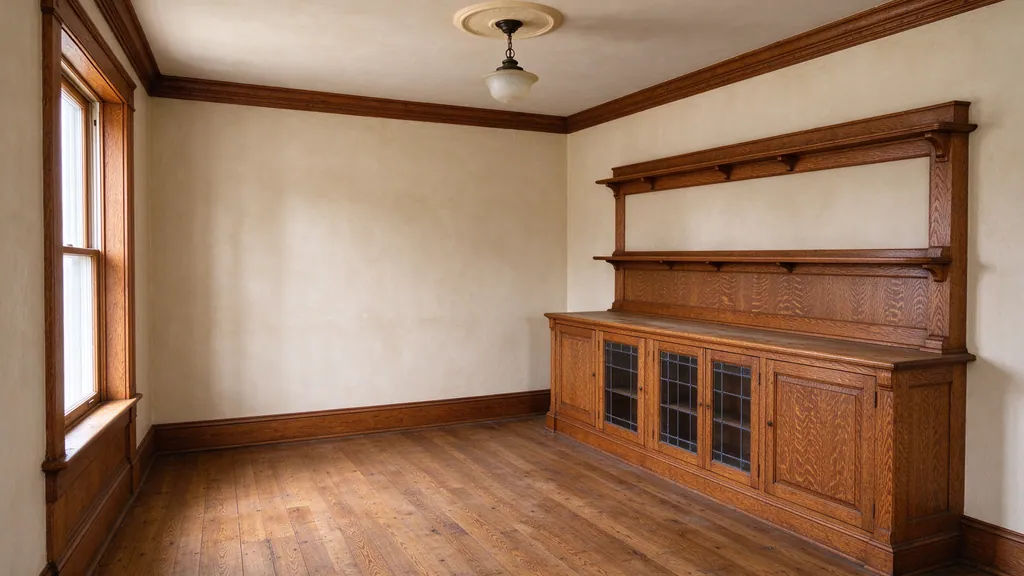
Your house needs new wiring, and you’re worried about what a rewire will do to the original plaster, the oak casings and the built-in buffet. That worry is the right place to start.
At Northloom Minneapolis Knob and Tube, we rewire historic homes in Minneapolis and St. Paul. Our method is the same as on any rewire, but the planning goes further: we survey your plaster, trim, built-ins, ceilings and fixtures alongside the circuits, and we route the new wiring so they stay as they are.
What do you look at on the first visit?
We do two surveys at once: one of your circuits, one of your finishes.
- Circuits
- We trace and identify every circuit, as on any rewire.
- Finishes
- We note plaster condition, original trim, built-in cabinets, cove ceilings, medallions and paneling, room by room.
- Fixtures
- We check each original fixture for whether it can be kept, restored or replaced.
- Exterior
- Your service entrance and meter location, and whether a change would show from the street.
- Your scope
- A room-by-room plan of routes, openings and methods, with your choices noted.
How do you keep the plaster, trim and built-ins intact?
The finishes that make an old house worth keeping are also what a careless rewire damages first. We plan around each one.
| Finish | How we protect it |
|---|---|
| Original plaster | Few, planned openings, scored and cut cleanly, patched to match |
| Baseboards and casings | Removed and reinstalled when cable can run behind them, or left alone and worked around |
| Built-in buffets and bookcases | Cable routed around them from below or above, never through finished cabinet backs |
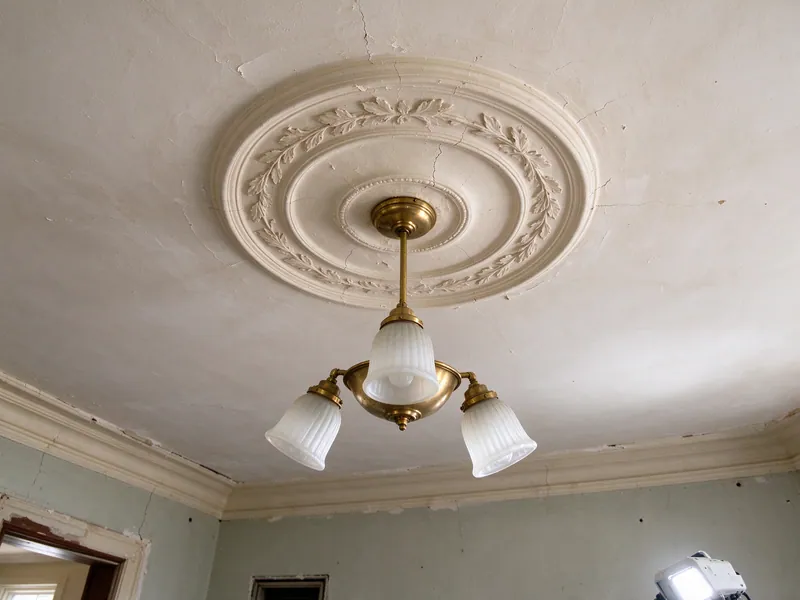
| Cove ceilings and medallions | Ceiling lights fed from the attic or the floor above |
| Wood paneling and wainscot | Routes chosen through adjacent walls or behind removable caps |
Plaster-wall rewiring covers how we open and patch in detail.
Many of the houses that most deserve this care are the oldest. City property records count 429 one- to three-unit buildings built before 1900 in Powderhorn alone, and 124 in Camden.
Does my historic district have to approve a rewire?
Minneapolis’s designated residential historic districts include Lowry Hill East, Lynnhurst, the Healy Block, Milwaukee Avenue, Fifth Street SE, Washburn-Fair Oaks, Victory Memorial Drive, Stevens Square, the Tilsenbilt Homes and Minnehaha. St. Paul’s include Historic Hill, Summit Avenue West, Dayton’s Bluff and Irvine Park.
- Interior work
- Rewiring inside your house is mostly out of sight. We confirm with the city, address by address, whether a particular project needs any review.
- Exterior changes
- A new service can move the meter, the mast or the line to the house. We check those changes with the city’s heritage preservation staff before they’re designed.
- Separate from the permit
- Electrical permits and inspections follow the usual process, separate from any district review.
The guide to rewiring in a Minneapolis historic district lists the districts and what to check.
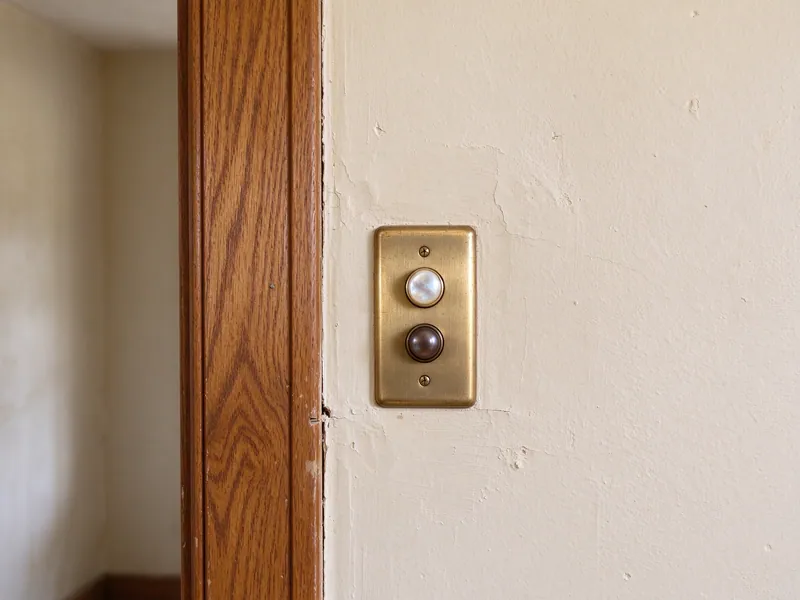
Can I keep my old fixtures and push-button switches?
Original electrical hardware is part of many older houses’ character, and some of it can stay.
- Fixtures
- Sound original fixtures can go back up on new grounded circuits; fixtures with brittle internal wiring go to a lighting restorer or are replaced with reproductions.
- Push-button switches
- Originals are as old as the wiring, so we usually replace them with listed reproductions that fit standard boxes.
- Plates
- Brass, porcelain or period-style plates are available for your new switches and outlets.
- Outlet placement
- We set new outlets in baseboards or low on walls, where a period house expects them, instead of wherever is quickest.
How will the new cable get to each room?
We plan the routes around your finishes, not the other way round. Attic drops and basement climbs come first, closets and chases carry cable between floors, and openings go behind removed trim, inside closets or where a new box will sit anyway. Taller houses take the most planning between floors: two-story and taller houses make up 74.3% of one- to three-unit buildings in Uptown and 47.4% in Southwest, and we plan that route room by room.
Some walls can’t be fished without visible openings, such as a masonry party wall or a wall with blocking every few feet. For those, your scope offers alternatives: a different wall, a route behind a built-in, or, in a utility space, surface raceway.
Can I get more light without changing the room?
Yes. Older rooms were lit differently: many had a single ceiling fixture, sometimes a pair of wall sconces, and few outlets. A rewire is your chance to add light while keeping the room’s character.
- Ceiling fixtures
- Kept on their original boxes, fed from the attic or the floor above.
- Sconces
- We reuse original sconce locations where they exist, since the wall was already opened there once.
- Switching
- Switches by the doors where period houses had them, with three-way switching added at stairs and long halls.
- Outlets
- Added low on walls or in baseboards, placed for how you use the room now.
Will a new panel or service change how the house looks?
The panel usually lives in the basement, out of sight, so it can be modern without touching the house’s character. The service entrance is different: the mast, meter and line to the house are on the outside wall. If you need a larger service, we plan its placement with the house’s appearance in mind and, in a designated district, check it with the city first. The panel upgrade page covers sizing.
How do you work with my plasterer or restorer?
Historic houses often bring in a plasterer, a painter, a woodworker or a lighting restorer alongside the electrical work. Your scope says which openings we leave for a plasterer, which trim we remove and return, and which fixtures go out for restoration, so each trade knows what it inherits and when. Openings a specialist will finish, we leave clean and square with the lath cut neatly, never half-patched.
What does a historic rewire cost?
We price it from your circuit list, the route survey and your finish choices. For the wiring itself, our typical range for a whole house is $12,000 to $36,600, before panel work and wall finishing. Trim removal and reinstallation, extra care at openings, reproduction devices and fixture restoration each add to that, and we list each one so you can choose where it matters most. You get a written estimate before anything is booked, and the cost guide covers the base budget.