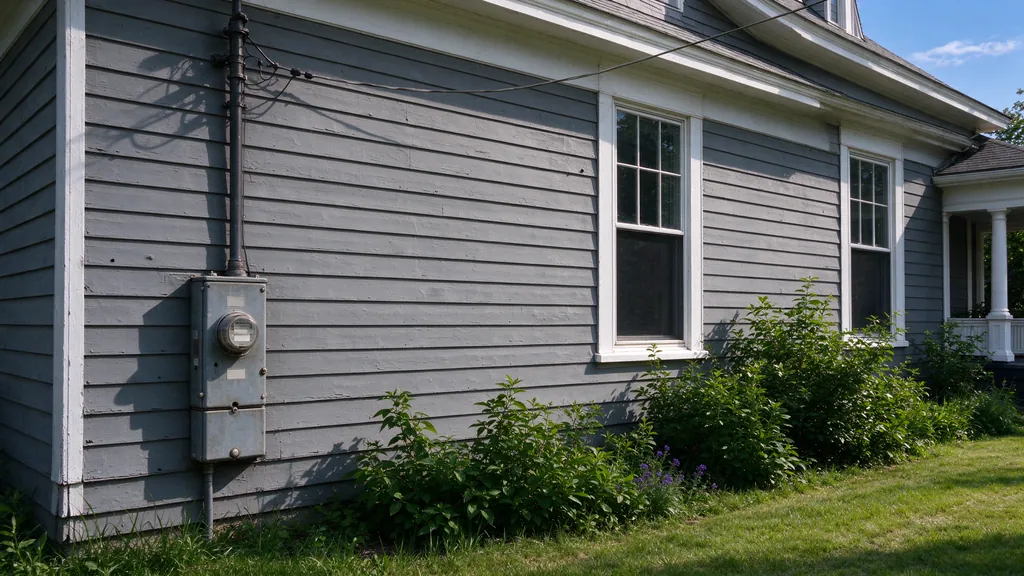
You love the house for its plaster, its trim and the way it looks from the street, and you’re worried a rewire will undo some of that. In a historic district, there’s also the question of whether you need anyone’s approval. For the inside, very little changes: new wiring runs hidden in the walls. The outside is where to slow down, especially if the meter or service has to move.
At Northloom Minneapolis Knob and Tube, we rewire historic homes in Minneapolis and St. Paul. This guide lists the designated districts, the questions to settle before anything is designed, and how we plan your rewire around the parts of the house you want to keep.
Is my house in a historic district?
Check this list first. The City of Minneapolis maintains a set of designated historic districts, and the residential ones include:
| District | Area |
|---|---|
| Lowry Hill East (the Wedge) | Calhoun Isles / Uptown |
| Lynnhurst | Southwest, along Minnehaha Creek |
| Healy Block | Central neighborhood, Powderhorn |
| Washburn-Fair Oaks | Whittier, Powderhorn |
| Milwaukee Avenue | Seward, Longfellow |
| Fifth Street SE | Marcy-Holmes, University |
| Minnehaha | Around Minnehaha Falls |
| Victory Memorial Drive | Camden |
| Stevens Square | Near Downtown |
| Tilsenbilt Homes | South Minneapolis |
| University of Minnesota Greek Letter Chapter Houses | University |
| M. Lochren Student Rooming Homes | University |
If you’re across the river, St. Paul has its own districts, including Historic Hill, Summit Avenue West, Dayton’s Bluff and Irvine Park.
Will the district care about my wiring?
Mostly it cares about what people see from the sidewalk: facades, rooflines, porches, windows and materials. For a rewire, that points to the outside of your house.
- Usually out of sight
- New wiring inside walls, new outlets and switches, a new panel in the basement.
- Check before designing
- A relocated meter, a new service mast or weatherhead, conduit on a visible wall, new exterior fixtures.
- Confirmed per address
- Whether a particular project needs review, and what kind, is confirmed with the city’s heritage preservation staff.
Will anything change on the outside of my house?
Often nothing. A rewire on its own may never touch the exterior. A service upgrade can.
| Exterior change | What to consider |
|---|---|
| Larger service | May need a new meter base, mast or weatherhead |
| Relocated meter | Usually to a side or rear wall where the utility and code allow |
| Service entrance cable or conduit | Routed on the least visible wall |
| Exterior lighting and outlets | Fixture style and placement on visible elevations |
Xcel Energy’s requirements, the electrical code and any district rules all bear on where that equipment goes. We raise it with heritage preservation staff before the service is designed, so you don’t end up redesigning it later.
How do you protect the inside?
District rules focus on the exterior, but most owners in these neighborhoods care just as much about their original interiors. We plan your rewire around them.
- Plaster
- Few, planned openings, scored and cut cleanly, patched to match.
- Trim
- Removed and reinstalled where cable can run behind it.
- Built-ins
- Worked around, never cut through.
- Ceilings
- Cove ceilings and medallions fed from above.
- Fixtures
- Originals kept where sound; reproductions where not.
Historic-home rewiring covers our method, and plaster-wall rewiring explains how openings are made and patched.
Does the district change my electrical permit?
No. Your electrical permit follows the usual process whatever the district. In Minneapolis, the Minnesota Department of Labor and Industry issues the permit and inspects; in St. Paul, the city does. The request is filed at or before the start of work, the inspector sees the new wiring at rough-in before anything is covered, and there’s a final inspection at the end.
My house is old but not in a district. Does any of this apply?
The care inside does; the exterior review question doesn’t. Most older houses aren’t in a designated district. City property records count 429 one- to three-unit buildings built before 1900 in Powderhorn and 124 in Camden, many outside any district. The same is true across Southwest, Longfellow and Northeast, where houses from the 1910s and 1920s still carry original plaster and woodwork. We plan those rewires with the same care.
In what order do you plan it?
- Trace the circuits and survey your finishes.
- Decide whether the service needs to change.
- If it does, check exterior placement with heritage preservation staff.
- Write the scope: routes, openings, methods and exterior equipment.
- Get the permit in place and start work.
Can I keep the old look of switches and fixtures?
Yes. Owners in historic districts often want the inside to stay period-appropriate as well as the outside.
- Push-button switches
- Listed reproductions fit standard boxes and look like the originals; the originals’ internals are as old as the wiring.
- Plates
- Brass, porcelain or period-style plates for switches and outlets.
- Fixtures
- Original fixtures reconnected on new circuits where sound, or sent to a lighting restorer.
- Outlet placement
- Low on walls or in baseboards, where period houses expect them.
What should I ask before I hire anyone?
- Will any exterior equipment change, and where would it go?
- Which walls will be opened, and can any openings go behind removable trim?
- Who patches, and to what finish?
- Which original fixtures can be kept on the new circuits?
- Are reproduction switches and plates available in the scope?
What record should I keep for the next owner?
A full one. A house in a historic district will be owned again, often by someone who cares about its history. We give you a record of the rewire listing the circuits, the routes taken, where openings were made and patched, and which fixtures are original and which are reproductions. It becomes part of the house’s own history, so keep it with the house papers and any district correspondence.
What if I’m remodeling at the same time?
Then plan both together. Owners of historic houses often pair a rewire with a kitchen or bath remodel. In a designated district, a remodel that changes windows, doors or exterior walls may raise its own review questions, separate from the wiring. Inside, the remodel’s open walls make it the least disruptive time to rewire the circuits that pass through them, and to trace the circuits that continue into the finished rooms around it. Planning both together means the plasterer and painter come once, and one record covers both projects. Replacement during a remodel covers how we fit into the remodel.
What changes for a house in St. Paul?
Very little in practice. St. Paul’s local heritage preservation districts, Historic Hill, Summit Avenue West, Dayton’s Bluff and Irvine Park, raise the same question for a rewire: exterior changes are checked with the city’s heritage preservation staff before they’re designed. Your electrical permit and inspections run through the city’s Department of Safety and Inspections as usual.
Will the extra care cost more?
Usually somewhat more than a standard rewire, because planning takes longer, openings are made more carefully and trim may come off and go back on. Our typical range for a whole-house replacement is $12,000 to $36,600, about $8 to $20 per square foot, before panel work and wall finishing, and historic care tends to move a house up within it. The cost guide covers the base budget, and your scope lists each historic-care choice so you can decide where it matters. Questions about your house: (612) 509-6597.