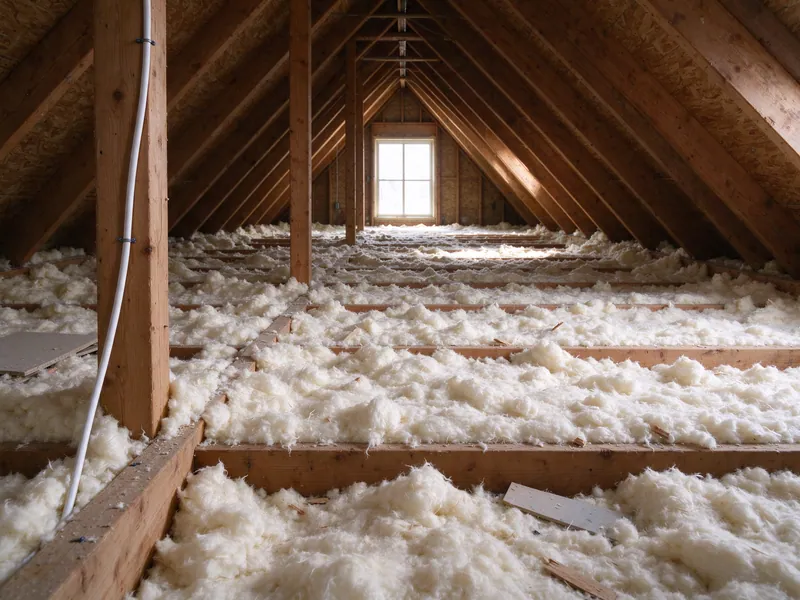
You want to get the knob and tube out, and you’d like to know whether anyone will help pay for it. The short answer: no program in Minnesota pays for the rewire on its own. What the rewire unlocks is a different story. Once your attic and walls can be insulated, Xcel Energy’s insulation rebates can cover a real share of that work. A state panel grant has been created but isn’t open yet, and the federal panel credit has ended.
At Northloom Minneapolis Knob and Tube, we replace knob and tube across Minneapolis and St. Paul. This guide covers the programs that touch the work, and the order that gets you the most from them. Rebate rules change, so confirm each one with its administrator before you count on it.
Will anyone pay for the rewire itself?
No. That’s worth knowing up front, so you can plan the budget honestly. Three costs sit with you no matter which programs you use.
- The rewire
- No utility, state or federal program pays for replacing knob and tube on its own.
- Insurance
- A homeowners policy pays for sudden loss, not for replacing wiring that still works, even when the insurer is the one asking for it.
- Wall repair
- Patching and painting after a rewire are yours to cover.
The good news is what comes after. Insulation is often the reason the wiring has to be settled in the first place, and insulation is where the rebate money is.
Which programs are worth a look?
| Program | What it covers | Where it stands |
|---|---|---|
| Xcel Energy insulation rebates | Qualifying attic and wall insulation, and air sealing | Open to customers who heat with Xcel gas or electricity; confirm current terms |
| Minnesota residential panel upgrade grant | Panel upgrades for income-qualified households | Created, not yet taking applications |
| Federal home improvement credit | Qualifying panels of 200 amps or more, among other items | Ended for property placed in service after 2025 |
| Knob and tube replacement itself | Nothing | No program |
What will Xcel pay toward insulation?
Xcel’s residential insulation rebates are the most useful program for owners of older houses here. These are the terms as Xcel states them.
| What you insulate | What has to be true | Rebate |
|---|---|---|
| Attic insulation | From R-19 or less to R-49 or more | 40% of project cost, up to $1,200 |
| Wall insulation | From empty wall cavities to R-11 or more | 40% of project cost, up to $1,200 |
| Air sealing | At least a 15% leakage reduction, tested before and after | 40% of project cost, up to $600 |
- Who qualifies
- Customers who heat their homes with Xcel Energy gas or electricity. Customers with Xcel electric service and central air but another heating fuel get smaller fixed amounts.
- Air sealing required
- Insulation rebates are paid only when air sealing is done too, and air sealing isn’t paid on its own.
- Who installs it
- The insulation contractor has to hold the right air-leakage certification; do-it-yourself insulation doesn’t qualify.
- Heat pump bonus
- A $600 bonus when qualifying insulation and air sealing are followed by a qualifying heat pump within two years.
Why can’t the insulation go in first?
Because the electrical code bars concealed knob and tube in hollow spaces filled with insulation around the conductors. The Center for Energy and Environment notes that insulation contractors generally won’t insulate around active knob and tube and that most want an electrician to confirm it’s inactive.
That fixes the order. We trace the attic and wall wiring, confirm it dead or replace it, and hand you a record for your insulation contractor. Then the insulation goes in. Our attic insulation service explains each step.
Should I wait for the state panel grant?
Only if you qualify and your timing allows. The state has created a grant for residential electrical panel upgrades, run by the Department of Commerce, for income-qualified households.
- Amounts
- Up to $3,000 for a single-family home below 80% of area median income, and $2,000 between 80% and 150%; multifamily buildings up to $50,000.
- Purpose
- Upgrades that reach 200 amps, support an all-electric home, or add a smart panel.
- Contractors
- Work by contractors on the program’s approved list.
- Not retroactive
- Work done before a grant is approved isn’t covered.
- Status
- Not yet taking applications.
If you may qualify and can wait, check the program’s status before any panel work starts. If you can’t wait, your rewire doesn’t depend on it. For reference, our typical range for a panel and service upgrade is $2,500 to $7,000.
What happened to the federal tax credit?
It ended. The federal Energy Efficient Home Improvement Credit covered qualifying property for several years, including panelboards of 200 amps or more that supported qualifying energy equipment, up to $600. It ended for property placed in service after 2025. If you claimed it for earlier work, ask a tax professional about anything that carries forward.
How do I get the most out of what’s available?
- Plan the rewire and the insulation together, so your attic is opened once.
- Confirm your Xcel heating account and the current rebate terms before work starts.
- Choose an insulation contractor with the required air-leakage certification.
- If you may qualify for the state panel grant, check its status before panel work begins.
- If a heat pump is in your plans, think about the timing for the Xcel bonus, and size the panel and service for it.
What order should the work go in?
If you’re planning several upgrades, the order matters as much as the rebates.
- 1. Trace and settle the wiring
- Know what’s live, then replace or disconnect the original circuits in the attic and walls that will be insulated.
- 2. Plan the panel and service
- Size them for what comes next, including a heat pump or induction range if you’re planning one.
- 3. Air seal and insulate
- With an air-leakage certified contractor, so the Xcel rebates apply.
- 4. Heat pump, if planned
- Within two years of qualifying insulation and air sealing, for the Xcel bonus.
In that order, your attic is opened once, your panel is changed once, and each step clears the way for the next.
What if the programs change?
They will. Utility rebates run on program cycles, state grants depend on funding and launch dates, and federal credits are set by Congress. Confirm each program’s terms with its administrator before you schedule work that depends on them.
What if I own a rental?
Xcel’s rebates follow the customer who heats with Xcel gas or electricity. In a rental, that may be you or the resident, depending on whose name is on the account. The state panel grant includes a multifamily amount. Confirm eligibility for the specific property and account before you schedule.
What paperwork do I need to keep?
Rebates are paid on documentation. Keep the insulation contractor’s invoice and test results, and keep the record showing your attic wiring was settled before the insulation went in. The Center for Energy and Environment suggests keeping the electrical invoice too, so the insulation contractor or an insurer can see the work was done. We give you that record at the end of the job.
How does this change my budget?
The rewire is a cost with no offset. The insulation that follows earns back part of its own cost through the rebates, and lowers your heating bills after that. Our typical range for a whole-house knob and tube replacement is $12,000 to $36,600, before panel work and wall finishing. The cost guide shows a full budget, and the panel upgrade guide explains how panel work relates to the wiring. If you’d like to talk through your house: (612) 509-6597.