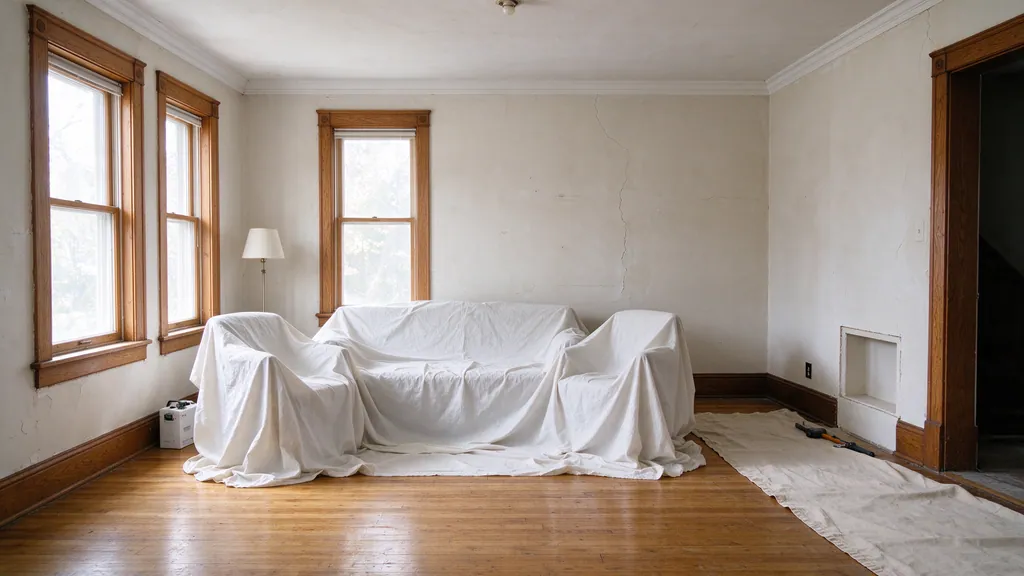
You want the knob and tube gone, but you’ve got kids in school, a job you do from the spare bedroom, and a Minnesota winter outside. Moving out for weeks isn’t a real option. The good news is you probably won’t have to. Most families stay home through a rewire, winter included. The work moves room by room, new circuits go live one at a time so outages are short and planned, and your furnace or boiler stays on a working circuit the whole way through.
At Northloom Minneapolis Knob and Tube, we rewire occupied houses across Minneapolis and St. Paul. This guide describes what living through it is actually like, and how to plan your household around it.
What will I notice at each stage?
Less than you might expect. Here’s what each stage looks like from inside the house.
| Stage | What you notice | How long it affects a room |
|---|---|---|
| Tracing | Lights and outlets switched off briefly, one circuit at a time | Minutes per circuit |
| Routing cable | Someone in the attic or basement; a few small openings in some rooms | The days that room is worked on |
| Rough-in inspection | Openings left open until the inspector has seen them | Until the inspection |
| Closing up | Patching, and some dust in that room | A day or two per room |
| Switch-over | A short outage for each circuit as it goes live | Part of a day |
| Final | Little, beyond the inspector’s visit | One visit |
Most of the time, most of your house is working normally. The disruption sits in whichever room is on that day’s schedule.
Will we have heat the whole time?
Yes. The Twin Cities’ January normal is 16.2°F and December’s is 22.0°F, so a rewire in those months is planned around heat from the first day.
- Always on
- Your furnace or boiler, its controls and its blower or pumps stay on a working circuit at every stage.
- Switched in a short window
- Heating equipment moves to its new circuit in a short planned window, often early in the day.
- Boiler houses
- Hot-water systems, common in Uptown and Southwest Minneapolis, have pumps and controls that get the same treatment.
- No open exterior walls overnight
- Openings in exterior walls are closed or covered before the end of the day.
When will the power be off, and where?
Only in the room being switched, and only briefly. New circuits are run while the old ones keep working. When a new circuit is ready, that room is switched over, and only that circuit is off while it happens.
- Kitchen and bedrooms
- Usually switched early, so you’re cooking and sleeping on new wiring first.
- Refrigerator and freezer
- Kept on a working circuit, or switched in a short window.
- Home office
- Scheduled around your work, with the outage window agreed in advance.
- Medical equipment
- Tell us about it at the start, so we plan around it.
The Center for Energy and Environment tells homeowners to expect power interruptions during replacement. When they’re planned ahead, they’re an inconvenience rather than a disruption.
How much mess should I expect?
Some, but contained. Fishing cable through the existing cavities keeps openings small and few, and the dust stays close to each one.
- Floors covered
- Drop cloths along work paths and in each room being worked on.
- Contained
- Dust is contained at each opening as it’s cut.
- End of day
- Openings closed or protected, and the room cleaned up.
- Furniture
- Pulled away from only the walls being opened that day.
Plaster houses make more dust than drywall ones. Our plaster-wall rewiring page explains how openings are cut cleanly.
How do I get the house ready?
- Clear paths to the panel, the attic hatch and the basement ceiling.
- Move small items, pictures and fragile things away from the walls in rooms on the schedule.
- Pick a room or two that will be worked on last, and use them as your base.
- Keep pets in a part of the house that isn’t being worked on that day.
- Tell us about anything that can’t lose power, such as medical equipment, an aquarium or a sump pump.
Can we keep sleeping, cooking and working here?
Most families keep their routines with small adjustments. Bedrooms are often done early and back in use quickly. The kitchen may have one day with limited outlets while its circuits are switched. If you work from home, choose a room to be done last, or work somewhere else on the one or two days your office is affected.
What does a typical work day look like?
Work usually starts in the morning with the rooms on that day’s schedule. Small items are already moved and the floors are covered. Cable is fished from the attic or basement to that room’s new box locations, and openings are cut where the scope says, with dust contained at each. Mid-day, a circuit may be switched over for a short outage. By evening, openings are closed or covered, the floor is cleaned, and the room is usable again. The rest of the house carries on as normal all day.
What if we own a duplex?
The work goes one unit at a time, so one household carries on normally while the other has its scheduled days. You handle notice to your residents; the scope gives you the dates and outage windows to put in it. Our duplex rewiring page covers scheduling.
When does moving out make sense?
Rarely, but a few situations make a short stay elsewhere worth thinking about: a whole-house rewire on top of major remodeling, vermiculite in the attic that needs abatement, or someone in the household who can’t tolerate dust or outages. If vermiculite turns up, attic work stops until it’s tested, and the plan for that material may shift the schedule. The guide to vermiculite, asbestos and lead explains what happens next.
Is winter a bad time to rewire?
Not really. Rewiring goes on year round. Winter brings the heat constraint, but attic work can be more comfortable than in a Minnesota August, when attics get very hot. Summer suits rentals between leases and houses being emptied before a move. Your schedule matters more than the season.
What should I ask before work starts?
Which rooms are done first? Which day does the kitchen lose outlets? When does the panel change? Ask these early, and your household can plan around the answers instead of reacting to them.
What’s the house like afterward?
Back to normal, and better. Once the final inspection passes, you have more outlets where you need them and circuits that don’t trip when the space heater and the microwave run together. Any patching you’ve left for your own painter or plasterer can follow on your schedule.
How long will all this take?
Working days depend on floors, access, circuit count and plaster, and the inspections add their own scheduling. The guide to how long a rewire takes explains each factor, and the guide to how replacement works walks through every step. Our typical range for a whole-house knob and tube replacement is $12,000 to $36,600, about $8 to $20 per square foot, before panel work and wall finishing. If you’d like to talk through your household’s schedule: (612) 509-6597.