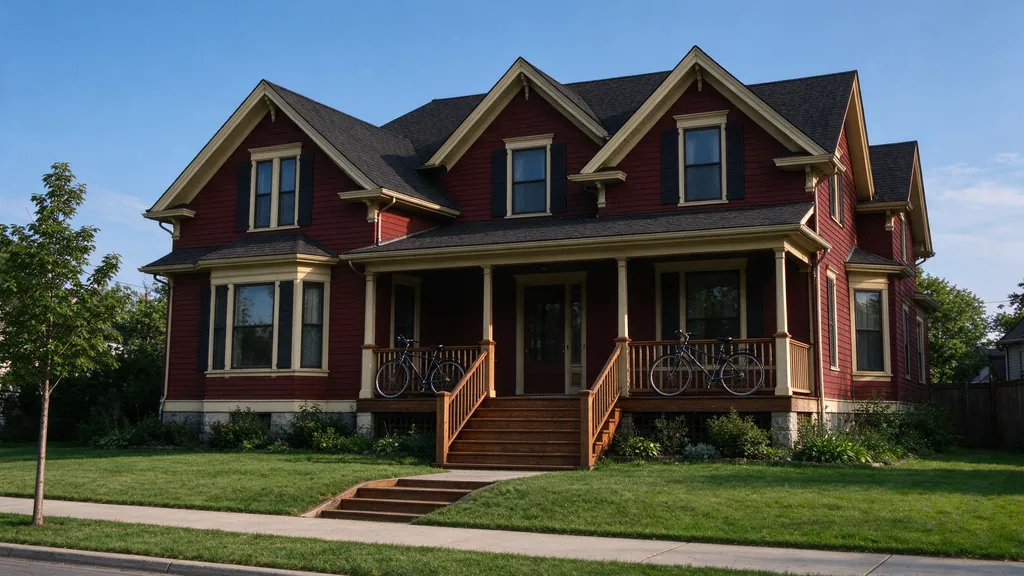
You own a rental a few blocks from campus. The lease ends in May, your insurer wants to know whether any knob and tube is live in each unit, and the house was divided into rooms long before you bought it, with circuits nobody has traced in decades. You want the wiring dealt with before the next lease starts.
At Northloom Minneapolis Knob and Tube, we replace knob and tube in Como, Marcy-Holmes and Prospect Park, the neighborhoods around the University of Minnesota’s Minneapolis campus, from Dinkytown to the Prospect Park Water Tower. Much of the housing here is old and much of it is rented, and both shape how we plan your rewire.
We trace each unit before we price it, so you know the scope before you schedule anything around a lease.
Can you work around my lease dates?
Yes. Rental houses near campus follow the academic calendar, and we can plan the electrical work around it too.
- Between leases
- A summer vacancy lets us rewire the whole building at once, without scheduling around residents.
- During a lease
- We work unit by unit, room by room, and give you dates and outage windows to put in your notice.
- Plan in spring
- If we trace and write the scope in spring, the permit is in hand before move-out.
- Records
- You get a written record for each unit, for your insurer and the next lease.
Minnesota’s homeowner electrical permits can’t be used on a duplex or other multi-unit building, so the permit is filed as part of the job.
How old are the houses around campus?
Old enough that original wiring is likely somewhere. City property records show 80.8% of the University community’s one- to three-unit residential buildings, 2,099 of 2,599, were built in 1939 or earlier. Twenty of them date from before 1900. The community also has 2,093 active rental licenses, so many of those older houses are rentals.
My house was split into units. Why is the wiring such a tangle?
Because conversions usually added panels without untangling what was already there. Many older single-family houses near campus have been divided into units or rooms over the decades; city records count 597 two- and three-unit buildings built by 1939 here. Owners often added a panel and meter for each unit and left the original circuits as they were, so a basement outlet, a hall light or an upstairs bedroom can still be fed from another unit’s panel.
| What tracing often finds | What we do about it |
|---|---|
| Original circuits shared between units | Move each unit’s circuits to its own panel |
| Hall and stair lights on a unit panel | Move them to a house panel |
| Added outlets spliced into original runs | Replace them end to end with grounded cable |
| Ungrounded three-prong outlets | Correct them with new circuits or labeled GFCI protection |
The duplex rewiring page explains our method.
How do you get cable through a tall house?
It depends on the heat. Close to half of these buildings, 48.5%, have two or more stories, and pre-1940 homes split almost evenly between forced air (50%) and hot water (43%). In a tall house with radiators, we carry cable between floors through closets and stacked walls. In a forced-air house, we can sometimes follow the duct chases.
Are there historic districts near campus?
Three of the city’s designated districts are here: Fifth Street SE in Marcy-Holmes, the University of Minnesota Greek letter chapter houses and the M. Lochren student rooming homes. Interior wiring is mostly out of sight. For any exterior change, such as a new meter location or service mast, we confirm with the city for your address before we design the job. Historic-home rewiring covers how we protect finishes.
What will my insurer want to see?
Usually a written answer to whether any knob and tube is energized, unit by unit. Our insurance documentation service turns a traced evaluation into that answer, and the record we give you after replacement adds the permit and inspection dates. At sale, we confirm with the evaluator what Minneapolis’s sale evaluation lists for your house, and TISH electrical repairs covers the common items.
My residents run everything off power strips. Is that a problem?
On original wiring, it can be. Rental rooms near campus run laptops, monitors, mini refrigerators, microwaves and space heaters, often from power strips plugged into whatever outlets the room has. On original circuits, that means ungrounded outlets carrying loads they were never sized for.
When we rewire, each room gets grounded receptacles where they’re actually needed, arc-fault protection on bedroom circuits, and enough circuits that one room’s space heater doesn’t trip a neighbor’s lights. If a full rewire isn’t in your plan yet, ungrounded outlet upgrades correct false three-prong outlets with labeled GFCI protection or new grounded circuits.
Can I insulate the attic of a rental?
Yes, once the wiring up there is settled. Attics in older rental houses are often poorly insulated and crossed by original runs. We confirm those runs dead or replace them first, and give you a record for the insulation contractor. Xcel Energy’s insulation rebate applies to the account holder who heats with Xcel gas or electricity, which in a rental may be you or the resident, so we confirm the terms before the work is scheduled.
What are the steps once the job is booked?
- Tracing
- We identify every circuit, unit by unit, and find the crossovers.
- Permit
- The permit goes to the Minnesota Department of Labor and Industry, which inspects electrical work in Minneapolis.
- Rough-in and final
- An inspector sees the new wiring before anything covers it, then again at the end.
- Switch-over
- We bring each unit’s new circuits live one at a time and keep the heat on.
What does the permit cost?
The Minnesota Department of Labor and Industry inspects electrical work here. For an existing one-family home, a rewire of 15 to 30 circuits carries a $191 state fee, or $226 with a new service; multi-unit buildings are figured per unit. The cost guide covers the rest of the budget.