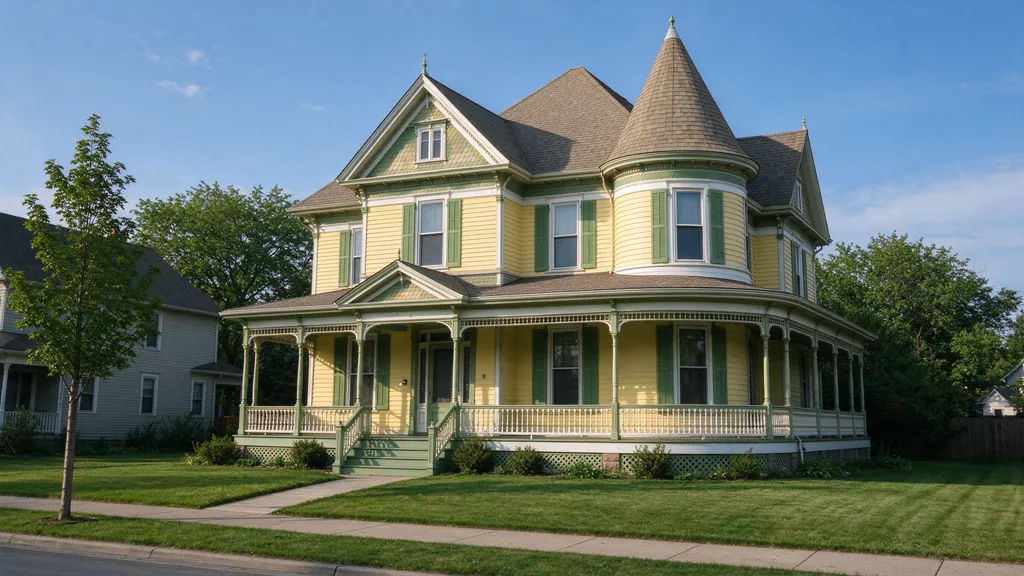
Your kitchen was redone decades ago, but the bedrooms and the third floor still run on one or two original circuits. Or you’ve just bought a two-unit building and want to know what each unit runs on before the residents renew. Or the plaster, trim and built-ins are the reason you bought the house, and you want them left as they are. In Powderhorn, it’s usually some mix of all three.
At Northloom Minneapolis Knob and Tube, we replace knob and tube across Powderhorn, from Whittier and Lyndale near the art institute down through Central, Bancroft and the streets around Powderhorn Park. Every job starts with us tracing each circuit from the fuse box or panel, because houses here have usually been updated in pieces over a very long time.
That tracing is what your price rests on. It tells us which circuits are original, which came later, and which rooms share them.
What happens when you come to a Powderhorn house?
We follow the same steps on every job. Here’s what Powderhorn houses tend to add to them.
- Tracing
- We match every circuit to its rooms and identify it, often across three or four generations of wiring in one house.
- Finish survey
- We note your trim, built-ins and plaster, since many houses here have finishes worth protecting.
- Permit
- The permit goes to the Minnesota Department of Labor and Industry, which inspects electrical work in Minneapolis. Getting it in place is part of the job.
- Rough-in and final
- An inspector sees the new wiring before anything covers it, then again at the end.
- Record
- You get a written list of what we replaced and disconnected, unit by unit in a duplex.
How likely is it that my house still has knob and tube?
Very likely somewhere, though only tracing confirms it for your house. Powderhorn has Minneapolis’s oldest housing stock. City property records show 9,131 of its 10,251 one- to three-unit residential buildings, 89.1%, were built in 1939 or earlier, and 429 were built before 1900, more than in any other community in the city.
Age is only part of it. How your house is built decides how the wiring runs and how we replace it.
| Measure | Powderhorn | What it means for your rewire |
|---|---|---|
| Built by 1939 | 89.1% | Original wiring likely somewhere in most houses |
| Built before 1900 | 429 buildings | Older finishes, taller rooms, more generations of wiring |
| Two- and three-unit buildings built by 1939 | 1,950 | Separate panels and meters, and crossovers between units |
| Two or more stories | 36.2% | A mix of story-and-a-half houses and taller Victorians |
| Main heat in pre-1940 homes | 54% forced air, 42% hot water | Duct chases help routing in some houses; radiator houses rely on closets |
Why does a Victorian take more planning?
Powderhorn’s pre-1900 houses ask the most of a rewire. They were built in the first decades of electric light, many were wired after construction, and then owners and residents rewired them in parts. When we trace one, we often find original knob and tube on the upper floors, cloth-covered cable from a mid-century kitchen and modern cable from a recent remodel, all on circuits that cross between them. We replace by circuit, not by material, so none of those splices stays live.
How do you reach the third floor?
About 36% of Powderhorn’s one- to three-unit buildings have two or more stories, and the oldest often add a finished third floor under the roof. We carry cable for those floors through closets and walls that stack from floor to floor, and we feed third-floor rooms from the small attic spaces behind their knee walls.
If your house heats with hot water, as 42% of Powderhorn’s pre-1940 homes do, there are no duct chases to share, so our route survey leans harder on closets. Story-and-a-half houses are simpler: we can reach most rooms from the attic and the basement ceiling.
I own a duplex or a rental. What changes?
The permit, the tracing and the scheduling. Powderhorn has more active rental licenses than any other Minneapolis community, 3,619, and 1,950 of its two- and three-unit buildings were built by 1939, so multi-unit rewiring is a common job here.
- No homeowner permit
- Minnesota’s homeowner electrical permits can’t be used on a duplex or other multi-unit building, so the permit is filed as part of the job.
- Unit by unit
- We trace each unit’s circuits to its own panel, and find and separate any crossovers between units.
- Common areas
- We move basement, stair and laundry circuits to a house panel where the building has one.
- Insurers
- Landlord policies often ask whether any knob and tube is energized; a record for each unit answers it.
The duplex rewiring page covers how we schedule around residents.
Is my house in a historic district?
Two of the city’s designated historic districts sit in this part of Minneapolis: the Healy Block, a group of Queen Anne houses, and Washburn-Fair Oaks, around the mansions near the art institute. Interior rewiring is mostly out of sight. For any exterior change, such as a new meter location or service mast, we confirm with the city for your address before we design the job. Historic-home rewiring covers how we protect finishes.
What will the permit cost?
Electrical work in Powderhorn is permitted and inspected by the Minnesota Department of Labor and Industry. For an existing one-family home, a rewire of 15 to 30 circuits carries a $191 state fee, or $226 with a new service. On the state schedule, the 15 to 30 circuit fee is per dwelling unit, so a duplex is permitted unit by unit. The request for inspection goes in at or before the start of work. The cost guide puts the permit in context with the rest of your price.
Can I finally insulate my attic afterward?
Yes, and that’s often the point. Many Powderhorn attics have little insulation, and active knob and tube is usually what holds it back. Once we’ve confirmed the attic wiring dead or replaced it, Xcel Energy’s insulation rebate pays 40% of qualifying attic or wall work, up to $1,200 each, for customers who heat with Xcel gas or electricity, with air sealing required. The attic insulation service explains the sequence.
Can we stay in the house while you work?
Most Powderhorn owners and residents do. We move room by room or unit by unit, and only pull furniture from the walls we’re opening that day. We cover floors and close or protect openings each evening. We switch new circuits over one at a time, and your furnace or boiler stays on a working circuit throughout, which matters in a city whose January normal is 16.2°F. The guide to living at home during a rewire covers each stage.