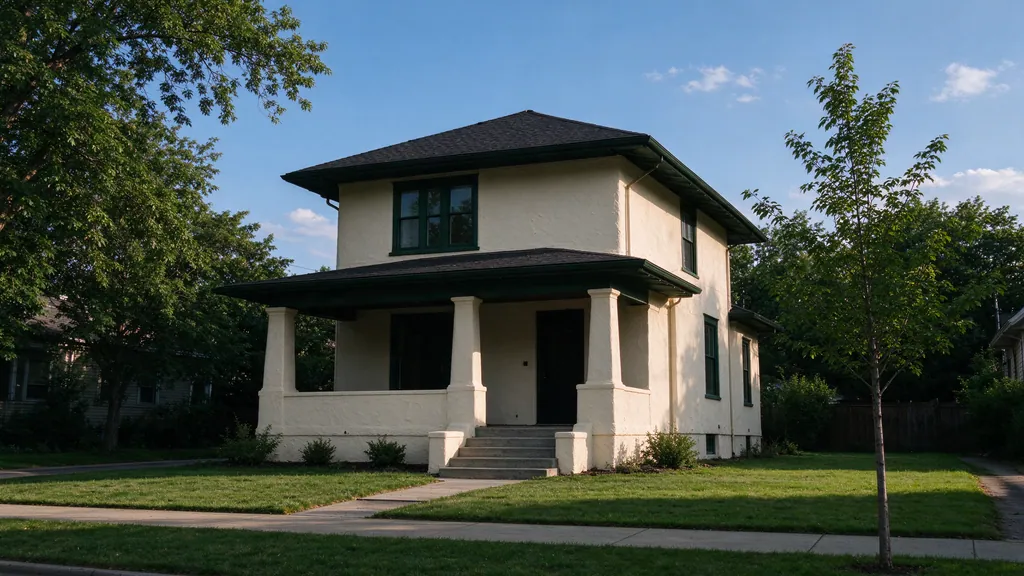
You have a two-story house near Lake Harriet or Minnehaha Creek, it heats with radiators, and nobody is sure how new cable will reach the second floor without tearing up the plaster. Maybe there’s still a fuse box, and you want central air. Maybe a buyer’s inspection report just flagged knob and tube in the attic, and the contingency clock is running.
At Northloom Minneapolis Knob and Tube, we replace knob and tube across Southwest Minneapolis, from Linden Hills and Fulton to Tangletown, King Field and Armatage. Many houses here combine plaster walls, hot-water heat and a second or third floor, and we plan your rewire around all three.
We also plan it around what you’ll run next. A rewire is the right moment to size the panel for air conditioning, a heat pump or a car charger, so you only open the house once.
What do you look at on the first visit?
The upper floors first, because that’s where original wiring usually survives longest. Then we work out how to get there.
- Tracing
- We identify every circuit, paying special attention to the upper floors.
- Route survey
- We map closets, stacked walls and attic access floor by floor.
- Loads
- We ask what the house will run next: central air, a heat pump, an induction range, a car charger.
- Permit
- The permit goes to the Minnesota Department of Labor and Industry, which inspects electrical work in Minneapolis. Getting it in place is part of the job.
- Heat kept on
- Your boiler or furnace stays on a working circuit throughout.
How do you get cable upstairs in a house with radiators?
Through closets, stacked walls and plumbing chases. A boiler house has no ducts running between floors for cable to follow, so we look for the paths the framing already gives us. That’s the common case here: in Southwest, 61% of pre-1940 homes heat with hot water and 38% with forced air.
| Heating type | What it means for new cable |
|---|---|
| Hot water (radiators) | No duct chases between floors; we run cable in closets, stacked walls and plumbing chases |
| Forced air | Duct runs create chases that cable can sometimes follow |
Height matters as much as heat. About 47.4% of Southwest’s one- to three-unit buildings have two or more stories, so circuits for your upstairs bedrooms have to cross a finished floor. If your closets stack above one another, we can usually carry everything through them. If they don’t, you may need a few openings in a hall or behind a radiator.
We keep your boiler and its controls on a working circuit through every stage. With a January normal of 16.2°F, a cold boiler isn’t an option.
Is my house old enough to have knob and tube?
It depends on when your house went up, and Southwest built across several decades. It has more pre-1940 housing than any other Minneapolis community: city property records count 10,219 one- to three-unit buildings built in 1939 or earlier, 62.7% of the 16,298 in the community. The rest went up in the 1940s and after.
So a single block can mix both. A 1915 foursquare may still carry knob and tube on its upper floors, while a house finished a few decades later on the same street may have cloth-covered cable instead, with no knob and tube at all. We trace your house to find out which it has before we write the scope, and cloth wiring replacement covers the later cable.
Will I need a bigger panel for air conditioning or a heat pump?
Often, yes. Many owners here pair a rewire with a heat pump, central air or an induction range. Original circuits were sized for lights and a radio, so we run a load calculation for what your house will actually run, and that decides the panel and service size.
- Panel first or last
- If original circuits are still live, we usually change the panel at the end of the rewire, so new circuits land on it directly.
- Service size
- We calculate it from your actual and planned loads and state it in the scope.
- Xcel
- A service change brings in Xcel Energy to disconnect and reconnect, and we schedule that with the inspections.
The panel upgrade page covers sizing, and the guide to modern appliance loads explains why original circuits struggle.
What happens to my plaster, trim and finished third floor?
We plan around them. Many Southwest houses keep original plaster, oak trim and built-ins, and some have a finished third floor behind knee walls. We usually feed those third-floor rooms from the attic spaces behind the knee walls, and your scope lists each opening by room. Plaster-wall rewiring explains how we plan and patch openings.
Does the Lynnhurst historic district affect my rewire?
Lynnhurst, along Minnehaha Creek, is one of the city’s designated historic districts. Interior wiring is mostly out of sight. For any exterior change, such as a new meter location or service mast, we confirm with the city for your address before we design the job. Historic-home rewiring covers how we protect finishes.
I’m buying a house here. What should I do about the inspection report?
Get the wiring traced before the contingency runs out. Buyers in Southwest often see knob and tube noted with only days left to decide. A traced evaluation shows how much is live and what replacing it would involve, which is what you need to decide, negotiate or line up insurance. The buying guide covers the questions to settle first.
What about a duplex?
Southwest is mostly single-family, but not entirely. City property records count 713 two- and three-unit buildings built by 1939, and the community has 2,165 active rental licenses. We rewire a duplex here like any other: each unit traced to its own panel, crossovers between units separated, common basement and laundry circuits moved to a house panel, and the work scheduled one unit at a time around residents.
Minnesota’s homeowner electrical permits can’t be used on a duplex, so the permit is filed as part of the job. The duplex rewiring page covers the details.
What does the permit cost for a bigger house?
The Minnesota Department of Labor and Industry inspects electrical work here. A rewire of 15 to 30 circuits in an existing one-family home carries a $191 state fee, or $226 with a new service. Larger houses over 30 circuits are charged $12 a circuit, so 40 circuits and a new service come to $541. The cost guide puts that in context with the rest of your price.